Your cart is currently empty!
Category: Energy
Energy

PUCSL announces new renewable energy feed‑in tariffs
The Public Utilities Commission of Sri Lanka (PUCSL) has announced new feed‑in tariffs for electricity generated from renewable energy sources, effective from August 25, 2026 and valid until February 24, 2027.
According to the PUCSL, the tariffs were determined under powers granted by the Sri Lanka Electricity Act No. 36 of 2024, following a series of public consultations held in line with the PUCSL Act No. 35 of 2002.
Addressing the media, PUCSL Officials said the new pricing formula was based on cost data, stakeholder proposals, and government policy.
Feed‑in Tariffs for Renewable Power Plants
- Mini hydro – Rs. 30.37 + Rs. 4.50 per kWh
- Wind – Rs. 20.80 + Rs. 4.93 per kWh
- Biomass – Dendro – Rs. 16.43 + Rs. 3.89 + Rs. 31.20 per kWh
- Biomass – Agricultural/Industrial Waste – Rs. 14.29 + Rs. 3.39 + Rs. 17.80 per kWh
- Municipal Solid Waste – Rs. 41.72 + Rs. 14.83 per kWh
- Waste Heat Recovery – Rs. 14.29 + Rs. 3.39 per kWh
- Ground Mounted Solar PV – Rs. 18.00 + Rs. 2.72 per kWh
- Floating Solar PV – Rs. 23.58 + Rs. 3.92 per kWh
Rooftop Solar Prosumer Tariffs
- Up to 10kW – Rs. 23.11 per kWh
- 10–40kW – Rs. 19.15 per kWh
- 40–250kW – Rs. 17.11 per kWh
- 250–1000kW – Rs. 15.81 per kWh
- New Rooftop Solar + BESS – Rs. 45.53 per kWh (priority time, first 15 years); Rs. 15.81 thereafter
- Existing Rooftop Solar + BESS – Rs. 33.51 + (R1/0.95) per kWh (first 15 years); R1/ thereafter
Renewable Plants with Battery Storage
- Ground Mounted Solar PV – Rs. 47.08 (priority time), Rs. 18.00 (other periods)
- Floating Solar PV – Rs. 53.28 (priority time), Rs. 23.58 (other periods)
The PUCSL has also imposed a condition requiring the National System Operator (NSO) to connect sufficient electricity storage systems and renewable capacity to the grid by Q1 2027 to prevent possible shortages. (Newswire)

Understanding Solar PV Systems: A Guide to Clean Energy
If you are considering clean energy-a transition highly encouraged-you have probably come across the term “solar PV system” numerous times. Without necessarily having to be an expert-that would be our job!-a little background about how a solar PV system works will help you make the right choice for your home or business.
In this article, we will cover:
- What a solar PV system is
- How a solar PV system works
- What is Solar PV System?
Solar PV systems are the perfect way to garner energy from the sun and reduce your carbon footprint.
The second thing to do is to understand what they are and how they work. “PV” is an abbreviation of “photovoltaics.” A solar PV system is a power system that converts sunlight into electricity with the use of the photovoltaic effect.
Basic Principles of Solar PV System
Solar PV panels convert sunlight into electricity with the help of cells. Sun falling on a cell produces an electric field between its layers and allows the flow of electricity. Greater the intensity of light, greater will be the volume of electricity produced.Although the energy generated by a single panel is quite small, the combining of several such panels yields a significantly higher output.
Components of a Solar PV System
A solar PV system is an integrated collection of two or more solar panels interconnected with an inverter and other electrical and mechanical components:- Photovoltaic modules
- Module mounting structures
- Inverter
- Electrical cables
Of course, different-sized systems do exist: rooftop installations and portable systems up to utility-scale generation plants.How a Solar PV System Works
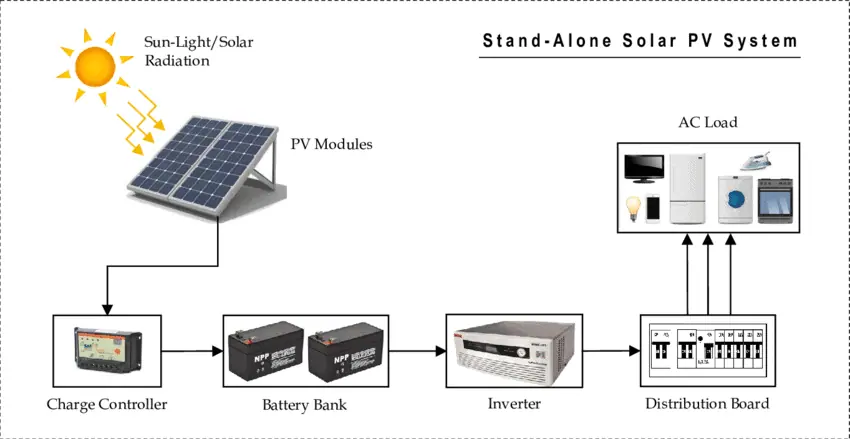
A solar PV system may operate in the following manner:- They can be an off-grid stand-alone systems, completely disconnected from the traditional power grid.
- They can be connected to the utility grid.
- They can be grid-tied, the most common type of residential solar system worldwide.
To know more about the types of Solar PV systems, read our article on Types of Residential Solar Energy Systems.
How a Solar PV System Works
One of the first things to learn about how solar PV systems work is the difference between direct current and alternating current.Solar panels are designed to generate DC electricity, which implies that electrons move in only one direction. However, homes and buildings operate by using AC, where the electric charge periodically reverses direction for efficiency and minimum losses in transmission. Therefore, this DC electricity will have to be converted into usable AC electricity by an inverter.
Any building on the electrical grid has some sort of utility meter that is used for measuring and feeding power. So, when the installation of solar panels is done on your roof, they tie into your home’s utility meter, thereby giving you access and visibility into the energy your solar system produces.
When your solar power system produces more electricity than what you consume, the excess goes back onto the grid.
If you are interested in solar batteries, we have one post discussing the ins and outs on surplus energy.
How a Solar System Works in 6 Steps
- The photovoltaic cells within your solar panels absorb sunlight and convert solar energy into electricity.
- These cells are made of semiconductor materials such as silicon.
- Sunlight absorbed by the semiconductor; that is exactly what enables it to dislodge electrons from their positions.
- The electrons that are freed consequently carry a negative charge and flow towards the front surface of the cell.
- This results in the back becoming positively charged relative to the front, thereby creating a voltage potential between the front and back of the cell, in a manner of speaking similar to battery terminals.
- The current that is collected by wires can be used immediately or stored in a solar battery for later.
- Contrary to the myths people have regarding solar, the cells can generate electricity during cloud cover days, though not as compared to sunny days, as shared in our article, “10 Solar Myths and Facts You Need to Know.”
Advantages of a Solar PV System
A significant advantage of a solar PV system is that it operates on its own. It doesn’t need to be turned on and off at all times; the sunlight does this job automatically.You also do not have to switch in and out of solar power and grid power; your solar system automatically switches when this happens, depending on how much energy you consume. Another added advantage is that solar systems hardly require any maintenance, and hence you might not even notice they are present.
Conclusion
The takeaway from that would be that the photovoltaic cells on your solar PV system absorb sunlight and convert it into DC electricity. The inverter then converts the DC electricity into AC so that it is at its most efficient when being transmitted. Congratulations, you now understand a fair amount about solar PV systems!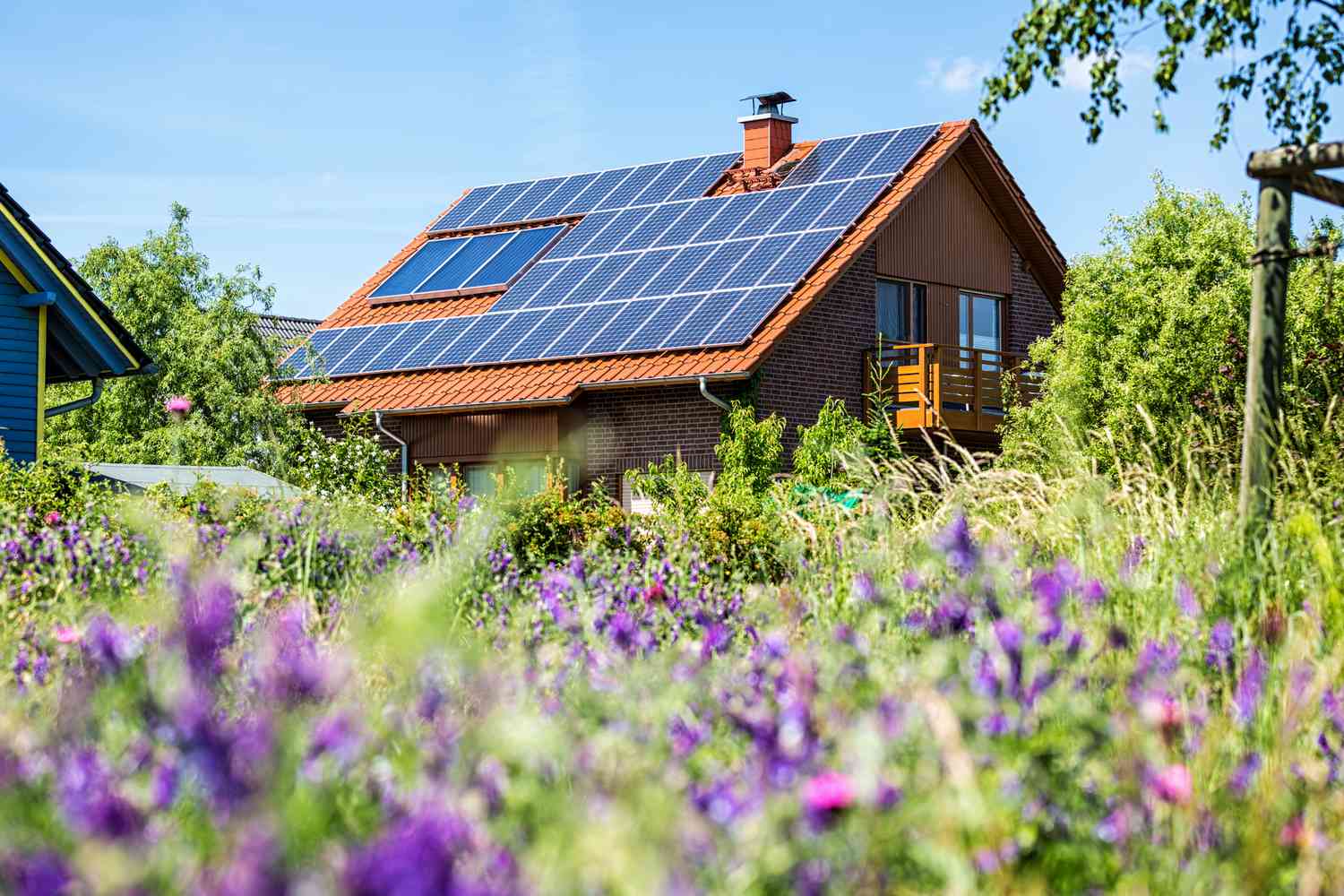
How to find a Best Home Solar Provider
As the world continues to shift towards renewable energy, many homeowners are considering installing solar panels to reduce their carbon footprint and save on energy costs. However, choosing the right solar provider can be a daunting task, with so many options available in the market. In this article, we will guide you on how to find the best home solar provider that suits your needs.
- Research and compare providers The first step in finding the best home solar provider is to research and compare different providers. Look for providers that have a good reputation in the market and have been in business for a while. Check their website and read reviews from previous customers to get an idea of their service quality. Compare their pricing, warranties, and equipment to find the best deal.
- Check for licenses and certifications Ensure that the solar provider you choose has all the necessary licenses and certifications to install solar panels in your area. These certifications vary by state, so make sure the provider you choose is licensed in your state.
- Look for experience and expertise Experience and expertise are crucial when it comes to choosing a solar provider. Look for providers that have been in business for a while and have a proven track record of successful installations. They should have a team of trained and certified installers who can handle the installation process effectively.
- Check the quality of equipment The quality of solar equipment can significantly impact the performance and efficiency of your solar system. Choose a provider that offers high-quality solar panels and inverters from reputable manufacturers. Check the warranties provided for the equipment and ensure they are long enough to cover the expected lifespan of the system.
- Evaluate customer service Good customer service is essential when it comes to choosing a solar provider. Look for providers that offer excellent customer service and support. They should be responsive to your inquiries and able to provide timely assistance in case of any issues.
- Check financing options Solar panel installation can be expensive, but some providers offer financing options to help homeowners afford the upfront cost. Look for providers that offer flexible financing options, such as loans or leases, to help you pay for the system over time.
In conclusion, finding the best home solar provider requires careful research and evaluation. Look for providers with a good reputation, necessary licenses and certifications, experience and expertise, high-quality equipment, excellent customer service, and flexible financing options. By following these guidelines, you can find a solar provider that suits your needs and helps you achieve your energy goals.
Different Types of Solar Energy
As the world continues to shift towards renewable energy, solar power has emerged as a popular and effective source of clean energy. Solar energy is harnessed through various technologies, each with its unique characteristics and benefits. From photovoltaic panels to concentrated solar power, the different types of solar energy offer diverse solutions for various energy needs. Whether you are a homeowner looking to reduce your energy bills, a business owner seeking to power your operations with renewable energy, or a government looking to invest in large-scale solar projects, understanding the different types of solar energy is crucial. In this article, we will explore the various types of solar energy and the benefits they offer. So, whether you’re a solar enthusiast or just curious about the different technologies available, buckle up and get ready to learn!
Photovoltaic (PV) Solar Energy
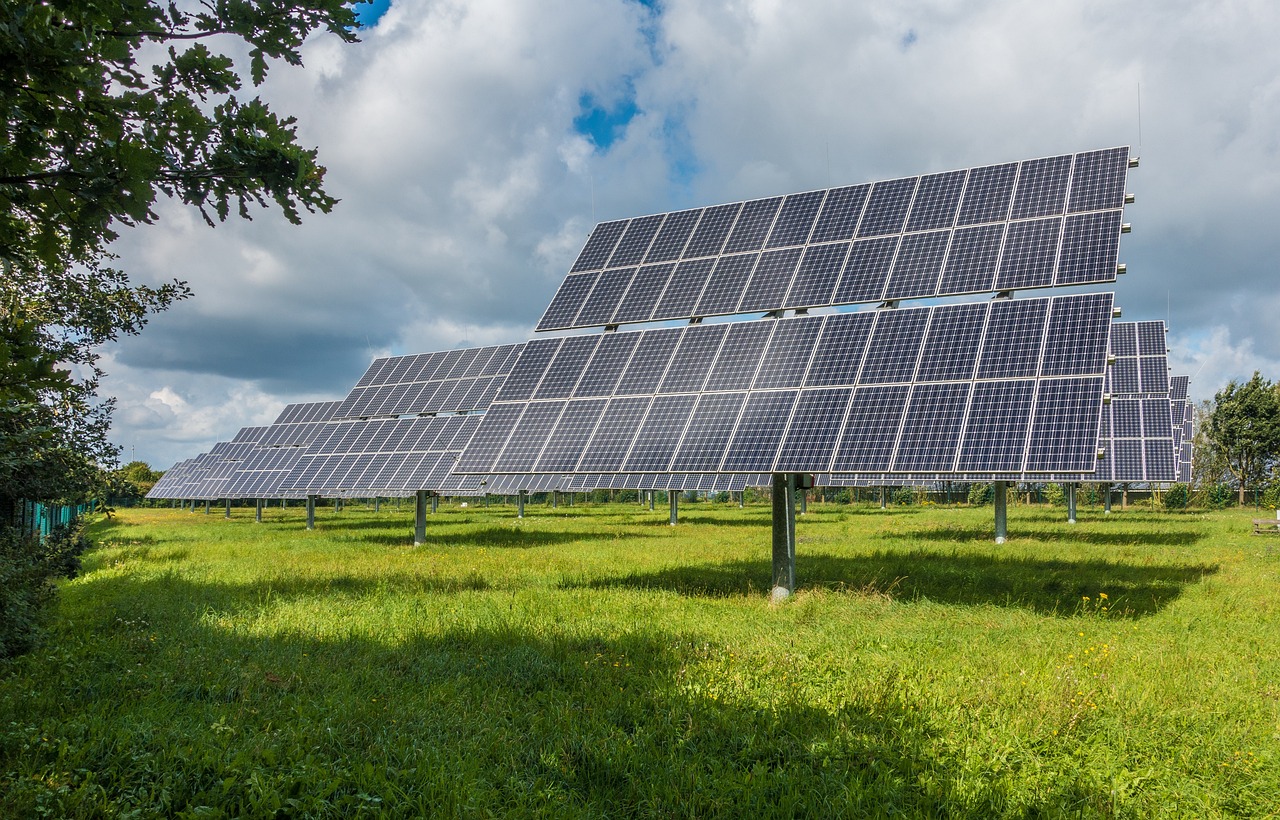
Photovoltaic (PV) solar energy is the most common type of solar energy used today. It involves the use of solar panels to convert sunlight into electricity. PV panels are made up of photovoltaic cells that are connected in series and parallel to form an array. When sunlight hits the cells, it excites the electrons, which causes them to move, generating a flow of electricity. PV panels can be installed on rooftops or on the ground, and they can be used to power homes, businesses, and even entire communities.
One of the benefits of PV solar energy is that it is a mature technology with a proven track record. PV panels can last for up to 25 years or more, and they require very little maintenance. Another advantage is that PV solar systems can be modular, meaning they can be scaled up or down depending on the energy needs of the user. However, PV solar energy does have some disadvantages. For example, it requires a large amount of space to generate significant amounts of electricity, and it can be expensive to install.
Concentrated Solar Power (CSP)
Concentrated Solar Power (CSP) is a type of solar energy that uses mirrors or lenses to concentrate sunlight onto a small area, creating heat that is then used to generate electricity. CSP systems can be divided into two categories: parabolic troughs and solar power towers. Parabolic troughs use curved mirrors to focus sunlight onto a tube filled with a heat transfer fluid, such as oil or water. The fluid is then used to produce steam, which drives a turbine to generate electricity. Solar power towers, on the other hand, use a central receiver to collect the sunlight reflected by a field of mirrors. The heat is then used to generate electricity in the same way as parabolic troughs.
One of the benefits of CSP is that it can generate electricity even when the sun is not shining, as the heat can be stored for later use. This makes CSP a more reliable source of energy than PV solar panels. CSP systems are also more efficient at generating electricity on a per-acre basis, as they require less land than PV panels. However, CSP systems are more expensive to build and maintain than PV panels, and they require more complex technology.
Passive Solar Energy
Passive solar energy is a type of solar energy that uses the design of buildings to capture and use sunlight for heating and lighting. Passive solar design involves using building materials and orientation to maximize the use of natural light and heat. For example, a building can be designed with large windows on the south side to allow sunlight to enter and warm the interior. The use of thermal mass, such as concrete or brick, can also help to store the heat and release it slowly over time.
One of the benefits of passive solar energy is that it is a low-cost and low-tech solution that can be applied to new or existing buildings. Passive solar design can also reduce the need for artificial lighting and heating, which can save energy and reduce utility bills. However, passive solar energy is limited by its dependence on the location and orientation of the building. Buildings in regions with low levels of sunlight may not be able to benefit from passive solar design.
Solar Water Heating
Solar water heating is a type of solar energy that uses the heat from the sun to heat water for domestic or commercial use. It involves the use of a collector, which absorbs sunlight and transfers the heat to a tank of water. The heated water can then be used for showers, washing, and other purposes. Solar water heating is a popular technology in many parts of the world, particularly in sunny regions with high energy costs.
One of the benefits of solar water heating is that it can be a cost-effective way to reduce energy bills and carbon emissions. It can also be used in combination with other energy sources, such as gas or electricity, to provide hot water on cloudy days. However, solar water heating is limited by its dependence on sunlight and can be less effective in regions with low levels of sunlight.
Hybrid Solar Energy Systems
Hybrid solar energy systems combine two or more types of solar energy technologies to maximize energy production and efficiency. For example, a hybrid system may combine PV solar panels with a CSP system or a solar water heating system. Hybrid systems can be customized to meet the specific energy needs of the user and can be designed to provide electricity, hot water, and heating and cooling.
One of the benefits of hybrid solar energy systems is that they can provide a more reliable and cost-effective source of energy than a single system alone. Hybrid systems can also be designed to operate off-grid, which can be useful in remote locations or during power outages. However, hybrid systems can be more complex and expensive to install and maintain than a single system.
Advantages and Disadvantages of Each Type of Solar Energy
Each type of solar energy has its unique advantages and disadvantages. PV solar energy is a mature technology that is reliable and modular, but it requires a large amount of space and can be expensive to install. CSP is more efficient and reliable than PV solar energy, but it is also more complex and expensive. Passive solar energy is a low-cost and low-tech solution that can be applied to new or existing buildings, but it is limited by its dependence on the location and orientation of the building. Solar water heating is a cost-effective way to reduce energy bills, but it is limited by its dependence on sunlight. Hybrid solar energy systems can provide a more reliable and cost-effective source of energy, but they can be more complex and expensive to install and maintain.
Choosing the Right Type of Solar Energy for Your Needs
When choosing the right type of solar energy for your needs, it is important to consider your energy goals, budget, location, and energy needs. For example, if you are a homeowner looking to reduce your energy bills, PV solar energy may be the best option, as it is a mature technology that is reliable and modular. If you are a business owner seeking to power your operations with renewable energy, a hybrid system may be the best option, as it can provide a more reliable and cost-effective source of energy. If you are a government looking to invest in large-scale solar projects, CSP may be the best option, as it is more efficient and reliable than PV solar energy.
Future of Solar Energy
The future of solar energy looks bright, with continued advancements in technology and increased adoption around the world. Researchers are developing new materials and designs for PV solar panels that can increase their efficiency and reduce their cost. CSP systems are also being improved, with new technologies that can store heat for longer periods of time. The use of solar energy is also expanding into new areas, such as transportation, with the development of solar-powered cars and buses.
Conclusion
Solar energy is a versatile and effective source of clean energy that can meet a variety of energy needs. From photovoltaic panels to concentrated solar power, the different types of solar energy offer diverse solutions for various energy needs. Understanding the advantages and disadvantages of each type of solar energy is crucial when choosing the right system for your needs. As the world continues to shift towards renewable energy, solar power will play an increasingly important role in meeting our energy needs.

Benefits of using solar power in the industrial sector
As the world continues to grapple with climate change, industries are increasingly looking for ways to reduce their carbon footprint and contribute to a greener future. One of the most promising solutions is the use of solar power, which has been gaining popularity in recent years. Solar power offers a range of benefits to industrial businesses, including cost savings, increased energy independence, and improved environmental performance. In this article, we’ll take a closer look at how solar power can benefit the industrial sector and explore some of the ways in which businesses can integrate solar power into their operations. Whether you’re a small manufacturing company or a large-scale industrial facility, there’s no doubt that solar power has the potential to transform the way you do business. So, let’s dive in and discover the advantages of using solar power in the industrial sector!
Understanding the Benefits of Solar Power for Industrial Operations
Solar power is a renewable energy source that harnesses the power of the sun to create electricity. Unlike traditional fossil fuels, solar power is clean, renewable, and sustainable. This means that it has the potential to drastically reduce the carbon footprint of industrial businesses, which are known to be some of the largest contributors to greenhouse gas emissions. But the benefits of solar power go beyond environmental sustainability.
Reduced Energy Costs through Solar Power
One of the most significant advantages of using solar power in the industrial sector is the potential for cost savings. By generating their electricity through solar power, businesses can reduce their reliance on the grid, which can be expensive and subject to price fluctuations. Solar power can also help businesses to avoid costly peak demand charges, which are fees levied by utilities when energy demand is at its highest. Additionally, solar power systems have a long lifespan and require minimal maintenance, which can further reduce costs over time.
Increased Sustainability and Reduced Carbon Footprint
As mentioned earlier, solar power is a clean and renewable energy source that produces no greenhouse gas emissions. By using solar power, industrial businesses can reduce their carbon footprint and contribute to the fight against climate change. This can be especially important for businesses that are subject to emissions regulations or that operate in environmentally sensitive areas. Moreover, using solar power can help businesses to demonstrate their commitment to sustainability and social responsibility, which can be attractive to customers, investors, and employees.
Enhanced Energy Security and Independence
Another benefit of using solar power in the industrial sector is the potential for enhanced energy security and independence. By generating their electricity on-site, businesses can become less reliant on the grid and less vulnerable to power outages and disruptions. This can be especially important for businesses that operate in remote areas or that require a high level of energy reliability. Additionally, solar power can help businesses to achieve energy independence, which can be an important strategic advantage in a rapidly changing energy landscape.
Improved Brand Reputation and Customer Appeal
As consumers become increasingly concerned about the environment and sustainability, businesses that can demonstrate a commitment to these values are likely to be more attractive to customers. By using solar power, industrial businesses can improve their brand reputation and appeal to customers who are looking for environmentally responsible products and services. Moreover, businesses that use solar power can differentiate themselves from their competitors and gain a competitive edge in the marketplace.
Government Incentives and Regulations for Solar Power in the Industrial Sector
The adoption of solar power in the industrial sector has been facilitated by government incentives and regulations. In many countries, governments offer financial incentives, such as tax credits and rebates, to businesses that install solar power systems. These incentives can help to offset the upfront costs of installing solar power and make it more financially feasible for businesses to adopt this technology. Additionally, some governments have implemented regulations that require businesses to reduce their carbon footprint or generate a certain percentage of their electricity from renewable sources. These regulations can create a market for solar power and incentivize businesses to adopt this technology.
Implementing Solar Power in Industrial Operations – Considerations and Challenges
While the benefits of solar power for industrial businesses are clear, implementing solar power systems can be complex and challenging. There are several factors that businesses need to consider when adopting solar power, including the size and type of the system, the location and orientation of the solar panels, and the integration of the system with existing operations. Additionally, businesses need to ensure that they have the necessary permits and approvals from regulatory agencies, such as local building codes and zoning laws. Finally, businesses need to ensure that they have access to financing and that they can secure the necessary capital to invest in a solar power system.
Despite these challenges, many businesses have successfully implemented solar power systems and reaped the benefits of this technology. In the next section, we’ll take a look at some case studies of successful solar power implementation in the industrial sector.
Case Studies of Successful Solar Power Implementation in the Industrial Sector
IKEA
IKEA, the global furniture retailer, has made a significant commitment to sustainability and renewable energy. In 2012, the company announced plans to install solar power systems on the roofs of all of its stores and warehouses worldwide. To date, IKEA has installed more than 700,000 solar panels and generated more than 500 GWh of electricity from solar power. This has helped the company to reduce its carbon footprint and become more energy independent. Moreover, IKEA’s use of solar power has helped to differentiate the company from its competitors and improve its brand reputation.
General Motors
General Motors, the multinational automobile manufacturer, has also made a significant commitment to renewable energy. In 2017, the company announced plans to generate 125 MW of renewable energy by 2020, with a focus on solar power. To achieve this goal, General Motors has installed solar power systems at several of its facilities, including a 1.8 MW system at its Warren Transmission Plant in Michigan. This has helped the company to reduce its carbon footprint and demonstrate its commitment to sustainability. Additionally, General Motors has saved millions of dollars in energy costs by generating its electricity through solar power.
Anheuser-Busch
Anheuser-Busch, the multinational brewing company, has also embraced solar power as a way to reduce its carbon footprint and improve its sustainability. In 2018, the company announced plans to generate 100% of its electricity from renewable sources by 2025, with a focus on solar power. To achieve this goal, Anheuser-Busch has installed solar power systems at several of its breweries and other facilities, including a 2.76 MW system at its Newark brewery. This has helped the company to reduce its energy costs and become more sustainable, while also improving its brand reputation and appeal to customers.
Conclusion – The Future of Solar Power in the Industrial Sector
As we’ve seen, solar power offers a range of benefits to industrial businesses, including cost savings, increased energy independence, and improved environmental performance. Moreover, the adoption of solar power in the industrial sector has been facilitated by government incentives and regulations. While implementing solar power systems can be complex and challenging, many businesses have successfully adopted this technology and reaped the benefits. Looking ahead, it seems likely that solar power will continue to play an increasingly important role in the industrial sector, as businesses seek to reduce their carbon footprint and improve their sustainability. As such, businesses that embrace solar power are likely to gain a competitive edge in the marketplace and position themselves for long-term success.

What Is a Hybrid Solar System?
As the world grapples with the devastating effects of climate change, renewable energy sources have become increasingly popular. Solar energy, in particular, has gained traction, with many homeowners and businesses opting to install solar panels on their rooftops. But have you heard about hybrid solar systems? These innovative systems combine the best of solar and traditional energy sources to maximize efficiency and reduce costs. In this article, we’ll explore what hybrid solar systems are, how they work, and the benefits they offer. Whether you’re a homeowner looking to reduce your energy bills or a business owner looking to go green, understanding hybrid solar systems can help you make informed decisions about your energy consumption. So let’s dive in and explore the world of hybrid solar systems.
How Do Hybrid Solar Systems Work?
A hybrid solar system is a combination of both solar and traditional energy sources. These systems use solar panels to generate electricity during the day when the sun is shining. Any excess energy generated by the solar panels is stored in batteries for later use when the sun goes down. In addition to solar panels, hybrid solar systems also have a backup generator that runs on traditional fuel sources, such as diesel or natural gas. The backup generator is only used when the batteries are low or when there is not enough sunlight to generate sufficient electricity.
Hybrid solar systems are designed to be fully automated, meaning they switch between solar power, battery power, and traditional power sources seamlessly. The system is smart enough to know when to switch between the different sources, based on energy demand and weather conditions. This means that the homeowner or business owner does not need to manually switch between sources, and the system can run on autopilot.
Hybrid solar systems are also designed to be scalable, meaning they can be customized to suit the energy needs of the user. For example, a homeowner with a small home may only require a small hybrid solar system, while a business owner with a large commercial building may require a much larger system.
Advantages of Using a Hybrid Solar System
There are several advantages to using a hybrid solar system over a traditional solar system. One of the biggest advantages is that hybrid solar systems are more reliable. Because they have backup generators, they can continue to generate electricity even when there is not enough sunlight or when the batteries are low. This means that homeowners and business owners can rely on their hybrid solar systems to provide them with uninterrupted power, even during power outages.
Another advantage of using a hybrid solar system is that it is more cost-effective than using a traditional solar system. Hybrid solar systems are designed to maximize energy efficiency, which means that they generate more electricity than traditional solar systems. This means that homeowners and business owners can save money on their energy bills by using a hybrid solar system.
Hybrid solar systems are also more environmentally friendly than traditional solar systems. Because they use a combination of solar and traditional energy sources, they generate less carbon emissions than traditional solar systems. This means that homeowners and business owners can reduce their carbon footprint and help to mitigate the effects of climate change.
Hybrid Solar System Versus Traditional Solar System
While traditional solar systems are a great way to generate clean energy, they do have some limitations. One of the biggest limitations is that they can only generate electricity when the sun is shining. This means that they are not able to generate electricity at night or when the weather is cloudy. This can be a problem for homeowners and business owners who rely on electricity around the clock.
Hybrid solar systems, on the other hand, are designed to overcome these limitations. By combining solar panels with a backup generator, hybrid solar systems are able to generate electricity even when there is not enough sunlight. This means that they are able to provide homeowners and business owners with uninterrupted power, even during power outages.
Another advantage of using a hybrid solar system over a traditional solar system is that hybrid solar systems are more efficient. Because they are designed to maximize energy efficiency, they are able to generate more electricity than traditional solar systems. This means that homeowners and business owners can save money on their energy bills by using a hybrid solar system.
Types of Hybrid Solar Systems
There are several types of hybrid solar systems available on the market. The most common type is the grid-tied hybrid solar system. This type of system is connected to the grid and is designed to generate electricity for the home or business while also sending excess energy back to the grid. This excess energy is then credited to the homeowner or business owner’s energy bill, which can help to offset the cost of electricity.
Another type of hybrid solar system is the off-grid hybrid solar system. This type of system is designed to generate electricity for the home or business without being connected to the grid. This type of system is ideal for homeowners and business owners who live in remote areas where connection to the grid is not possible.
Components of a Hybrid Solar System
A hybrid solar system is made up of several components, including solar panels, batteries, a backup generator, and an inverter. The solar panels are used to generate electricity during the day when the sun is shining. Any excess energy generated by the solar panels is stored in batteries for later use. The backup generator is used to generate electricity when the batteries are low or when there is not enough sunlight to generate sufficient electricity. The inverter is used to convert the DC electricity generated by the solar panels and batteries into AC electricity that can be used to power appliances and electronics.
Installation and Maintenance of a Hybrid Solar System
Installing a hybrid solar system requires the expertise of a professional installer. The installer will assess the energy needs of the home or business and recommend a system that is tailored to those needs. Once the system has been installed, it will require regular maintenance to ensure that it is running efficiently. This includes checking the batteries, solar panels, and backup generator, as well as cleaning the solar panels to ensure that they are free from debris.
Cost of a Hybrid Solar System
The cost of a hybrid solar system will depend on several factors, including the size of the system, the type of system, and the location of the home or business. On average, a hybrid solar system can cost anywhere from $10,000 to $30,000 or more. While the initial cost of a hybrid solar system may be higher than that of a traditional solar system, the long-term savings on energy bills can make it a worthwhile investment.
Government Incentives for Hybrid Solar System
In many countries, there are government incentives available for homeowners and business owners who install hybrid solar systems. These incentives can include tax credits, rebates, and grants. These incentives can help to offset the cost of installing a hybrid solar system, making it a more affordable option for homeowners and business owners.
Conclusion
Hybrid solar systems are an innovative and cost-effective way to generate clean energy for your home or business. By combining solar panels with a backup generator, hybrid solar systems are able to provide uninterrupted power, even during power outages. They are also more efficient and environmentally friendly than traditional solar systems. While the initial cost of a hybrid solar system may be higher than that of a traditional solar system, the long-term savings on energy bills can make it a worthwhile investment. If you’re interested in installing a hybrid solar system, be sure to consult with a professional installer to determine the best system for your needs.

How Many Solar Panels Do You Need: Panel Size and Output
Are you considering switching to solar energy but are unsure of how many solar panels you’ll need for your home? It’s a common question, and with so many panel sizes and outputs available, it can be overwhelming to determine the best fit for your energy needs. But fear not, as a digital marketing specialist with a passion for sustainability, I’m here to break down the basics and help you make an informed decision. In this article, we’ll explore the factors that affect the number of solar panels you’ll need, including your energy consumption, roof size and orientation, panel size and efficiency, and more. By the end of this guide, you’ll have a better understanding of how to calculate the number of solar panels required for your home and what to look for when selecting the ideal panel size and output. Let’s dive in!
Understanding Solar Panel Size and Output
Before we dive into the specifics of how many solar panels you’ll need, let’s first understand the basics of solar panel size and output. Solar panel size is measured in watts (W) and refers to the amount of energy the panel can produce under ideal conditions. The output of a solar panel is affected by several factors, including the size of the panel, its efficiency, and the amount of sunlight it receives.
The efficiency of a solar panel refers to the percentage of sunlight it can convert into usable energy. For example, a solar panel with an efficiency of 20% can convert 20% of the sunlight it receives into usable energy. The size of a solar panel also affects its efficiency, as larger panels often have a higher efficiency rate than smaller panels.
Another factor that affects solar panel output is the amount of sunlight the panel receives. Panels that are installed in areas with a high amount of sunlight will have a higher output than panels installed in areas with less sunlight. Additionally, the orientation of the panel and the angle at which it is installed can also affect its output.
Factors that Affect Solar Panel Output
Several factors can affect the output of your solar panels, including your energy consumption, the size and orientation of your roof, the climate in your area, and the size and efficiency of your solar panels.
Your energy consumption is one of the most important factors to consider when determining the number of solar panels you’ll need. The more energy you use, the more solar panels you’ll need to generate enough power to meet your needs. You can determine your energy consumption by looking at your utility bills and calculating your average daily usage.
The size and orientation of your roof can also affect the number of solar panels you’ll need. If you have a small roof or one that is shaded by trees or other buildings, you may need to install smaller panels or fewer panels to generate enough power. Additionally, the angle at which your panels are installed can affect their output, so it’s important to work with a professional installer to ensure your panels are installed correctly.
The climate in your area can also affect your solar panel output. If you live in an area with a high amount of sunlight, your panels will produce more energy than if you live in an area with less sunlight. Additionally, if you live in an area with extreme temperatures, you may need to select panels that are designed to withstand those conditions.
Finally, the size and efficiency of your solar panels will also affect their output. Larger panels with a higher efficiency will produce more energy than smaller panels with a lower efficiency. It’s important to select panels that are the right size and efficiency for your needs to ensure you’re getting the most out of your solar energy system.
Calculating Your Energy Needs
To determine the number of solar panels you’ll need, you’ll first need to calculate your energy needs. As mentioned earlier, you can determine your energy consumption by looking at your utility bills and calculating your average daily usage.
Once you have your average daily usage, you can multiply that number by the number of days in a year to determine your annual energy consumption. For example, if your average daily usage is 30 kilowatt-hours (kWh) and there are 365 days in a year, your annual energy consumption would be 10,950 kWh.
Determining the Number of Solar Panels You Need
Once you’ve calculated your energy needs, you can determine the number of solar panels you’ll need to generate enough power to meet those needs. To do this, you’ll need to know the wattage of the solar panels you’re considering.
To calculate the number of solar panels you’ll need, divide your annual energy consumption by the wattage of the solar panels. For example, if your annual energy consumption is 10,950 kWh and you’re considering 300-watt solar panels, you would need 37 panels to generate enough power to meet your needs.
It’s important to note that this calculation is based on ideal conditions and assumes that your panels will receive maximum sunlight. In reality, your panels may not receive maximum sunlight all the time, so you may need to install additional panels to ensure you’re generating enough power to meet your needs.
Choosing the Right Solar Panel Size
When selecting the size of your solar panels, it’s important to consider your energy needs, the size and orientation of your roof, and the efficiency of the panels. Larger panels with a higher efficiency will produce more energy than smaller panels with a lower efficiency, but they may not be the best fit for your roof.
If you have a small roof or one that is shaded by trees or other buildings, you may need to install smaller panels or fewer panels to generate enough power. Additionally, the angle at which your panels are installed can affect their output, so it’s important to work with a professional installer to ensure your panels are installed correctly.
Benefits of Installing the Right Number of Solar Panels
Installing the right number of solar panels can provide several benefits, including reduced energy bills, increased energy independence, and reduced carbon emissions. By generating your own energy, you can reduce your reliance on traditional energy sources and save money on your monthly energy bills.
Additionally, solar energy is a renewable energy source that produces no emissions, making it a clean and sustainable option for powering your home. By reducing your carbon footprint, you’re helping to protect the environment and reduce the impact of climate change.
Common Mistakes to Avoid When Sizing Solar Panels
When sizing your solar panels, there are several common mistakes to avoid. One of the most common mistakes is underestimating your energy needs. It’s important to accurately calculate your energy consumption to ensure you’re installing enough solar panels to meet your needs.
Another mistake is selecting the wrong size or efficiency of solar panels. It’s important to work with a professional installer to determine the best fit for your home and energy needs.
Finally, it’s important to avoid installing too many solar panels. While more panels may seem like a good idea, they can actually reduce the efficiency of your system and lead to decreased output.
Maintenance and Care of Solar Panels
To ensure your solar panels are operating at their maximum efficiency, it’s important to perform regular maintenance and care. This includes cleaning your panels regularly to remove any dirt or debris that may be blocking sunlight.
Additionally, it’s important to work with a professional installer to ensure your panels are installed correctly and to monitor your system for any issues or malfunctions.
Conclusion
Switching to solar energy can provide several benefits, including reduced energy bills, increased energy independence, and reduced carbon emissions. When selecting the number of solar panels you’ll need, it’s important to consider your energy needs, the size and orientation of your roof, and the efficiency of the panels.
By working with a professional installer and selecting the right size and efficiency of solar panels, you can ensure you’re generating enough power to meet your needs and enjoy the many benefits of solar energy. So, what are you waiting for? Start exploring your solar options today and make the switch to a cleaner, more sustainable energy source!

The future of Solar Energy
As concerns about climate change continue to grow, the need for clean and renewable energy sources has become more pressing than ever before. Solar energy, in particular, has emerged as a promising solution to meet this need. With advancements in technology and increasing public awareness, the future of solar energy looks brighter than ever. In this article, we will explore the various trends and developments that are shaping the future of solar energy. From the adoption of new solar technologies to the growth of solar markets around the world, we will examine the key factors driving this renewable energy source forward. Whether you’re an environmentalist, a business owner, or simply someone interested in the latest energy trends, this article will provide you with a comprehensive overview of the exciting future of solar energy.
The Current State of Solar Energy
Solar energy has come a long way since the first solar cell was invented in 1954. Today, solar energy is used to power everything from homes and businesses to satellites in space. According to the International Energy Agency (IEA), solar energy is the fastest-growing source of renewable energy in the world. In 2019, the world added 115 gigawatts (GW) of solar power, bringing the total global capacity to 627 GW.
The United States is one of the leading countries in solar energy production, with California being the top state for solar energy usage. In fact, in 2020, California became the first state in the US to require all new homes to be built with solar panels. Other countries, such as China and India, are also embracing solar energy as a way to meet their growing energy needs.
Despite this growth, solar energy still only accounts for a small percentage of the world’s energy production. However, as the demand for clean energy continues to increase, it is expected that solar energy will play an increasingly important role in meeting that demand.
Advancements in Solar Technology
One of the key factors driving the growth of solar energy is advancements in solar technology. Over the past few decades, researchers and engineers have been working to improve the efficiency and affordability of solar cells. Today, solar cells are more efficient than ever before, with some cells able to convert up to 23% of the sunlight that hits them into electricity.
In addition to improving the efficiency of solar cells, researchers are also working on developing new types of solar cells. For example, perovskite solar cells are a type of solar cell that is made from a unique material called perovskite. These cells are cheaper and easier to manufacture than traditional silicon solar cells, and they have the potential to be even more efficient.
Another type of solar technology that is gaining popularity is solar shingles. These shingles are designed to look like traditional roofing shingles, but they are actually solar cells. This makes them a great option for homeowners who want to generate their own solar energy but don’t want to install traditional solar panels on their roofs.
Solar Energy Statistics
The growth of solar energy has been impressive in recent years. Here are some statistics to give you an idea of just how much solar energy has grown:
- In 2019, the world added 115 GW of solar power, bringing the total global capacity to 627 GW.
- Solar energy accounted for 45% of all new power capacity additions in the United States in 2019.
- The cost of solar energy has dropped by 82% since 2010.
- In 2019, the United States installed 13.3 GW of solar power, a new record for the country.
- By 2030, it is estimated that solar energy could provide up to 20% of the world’s electricity.
The Benefits of Solar Energy
There are many benefits to using solar energy. Here are just a few:
- Solar energy is renewable and sustainable, meaning that it won’t run out like fossil fuels.
- Solar energy produces no greenhouse gas emissions, which can help to mitigate climate change.
- Solar energy can be used to power homes and businesses, reducing the need for grid electricity.
- Solar panels can be installed on rooftops, reducing the amount of land that is needed for energy production.
- Solar energy can save homeowners and businesses money on their electricity bills.
Challenges Facing Solar Energy Adoption
Despite the many benefits of solar energy, there are still some challenges that are preventing wider adoption of this renewable energy source. One of the biggest challenges is the upfront cost of installing solar panels. While the cost of solar panels has decreased significantly in recent years, it can still be expensive to install a solar system.
Another challenge is the intermittency of solar energy. Because solar energy is dependent on the sun, it can’t be produced at night or during cloudy weather. This means that solar energy must be stored in batteries or supplemented with other types of energy, such as wind or hydroelectric power.
Finally, some people are hesitant to invest in solar energy because they are unsure of the long-term reliability of solar systems. While solar panels are designed to last for decades, some people worry that they may not be able to generate enough electricity to meet their needs over the long term.
Government Policies and Incentives for Solar Energy
To encourage the adoption of solar energy, many governments around the world have implemented policies and incentives to make solar energy more affordable and accessible. For example, in the United States, homeowners who install solar panels can take advantage of a federal tax credit that covers up to 26% of the cost of the system. Some states also offer additional incentives, such as rebates or performance-based incentives.
In other countries, such as Germany and Japan, feed-in tariffs are used to encourage the production of solar energy. A feed-in tariff is a policy that requires utilities to purchase renewable energy at a fixed price, which can make it more financially viable for homeowners and businesses to invest in solar energy.
The Future of Solar Energy
The future of solar energy looks bright. As technology continues to improve and the demand for clean energy increases, it is expected that solar energy will play an increasingly important role in meeting that demand. Here are some of the key trends and developments that we can expect to see in the future of solar energy:
Innovations in Solar Energy
Researchers and engineers are constantly working to develop new solar technologies that are more efficient, affordable, and easier to install. Some of the innovations that we can expect to see in the coming years include:
- Bifacial solar panels, which can generate electricity from both sides of the panel.
- Solar windows, which can be used to generate electricity while still allowing light to pass through.
- Solar paint, which can be applied to surfaces to generate electricity.
Growth of Solar Markets
As the demand for solar energy increases, we can expect to see the growth of solar markets around the world. In particular, developing countries are expected to be a key driver of solar energy growth in the coming years. This is because many developing countries have limited access to grid electricity, which makes solar energy a more viable and affordable option.
Increased Investment in Solar Energy
As more businesses and governments recognize the importance of clean energy, we can expect to see increased investment in solar energy. This investment will help to drive down the cost of solar panels and make solar energy more accessible to a wider range of people.
Conclusion
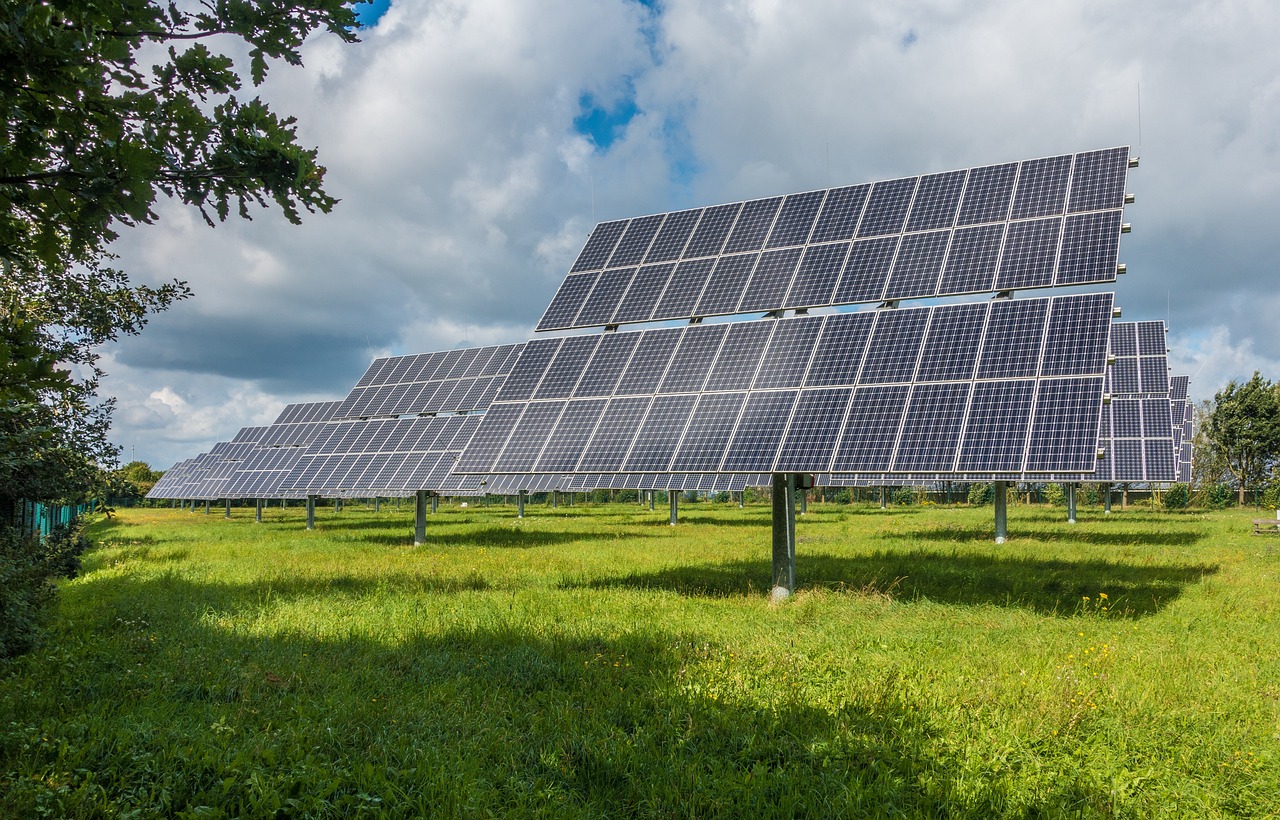
Solar energy is a promising solution to the world’s growing energy needs. With advancements in technology and increasing public awareness, the future of solar energy looks brighter than ever. While there are still some challenges to overcome, such as the upfront cost of solar panels and the intermittency of solar energy, the benefits of solar energy are undeniable. Whether you’re a homeowner, a business owner, or simply someone interested in the latest energy trends, investing in solar energy is a smart choice for a more sustainable future.
Planning a Home Solar Electric System
Are you tired of relying on traditional electricity sources that are not only expensive but also harmful to the environment? If yes, then it’s high time you consider planning a home solar electric system. With solar power, you can generate clean, renewable energy that not only reduces your carbon footprint but also saves you money in the long run. However, planning a solar electric system for your home can be a daunting task, especially if you’re not familiar with the technical jargon and components involved. That’s where I come in as a digital marketing specialist with expertise in promoting renewable energy solutions. In this article, I’ll guide you through the essential steps to take when planning a home solar electric system. From assessing your energy needs to choosing the right solar panels and hiring a professional installer, you’ll learn everything you need to know to make an informed decision about switching to solar power. So, let’s get started!
Benefits of Using Solar Energy at Home
There are several benefits to using solar energy at home. First and foremost, solar power is a clean and renewable energy source that does not emit harmful pollutants into the atmosphere. This means that you’ll be doing your part to reduce your carbon footprint and help combat climate change. Secondly, solar energy is a cost-effective alternative to traditional electricity sources. Once your solar electric system is installed, you’ll start saving money on your energy bills immediately. Thirdly, solar power is a reliable source of energy, even during power outages. This means that you’ll have access to electricity when you need it most, without having to worry about interruptions or downtime.
However, there are some drawbacks to using solar energy at home. One of the biggest drawbacks is the initial cost of purchasing and installing a solar electric system. While the long-term savings can be significant, the upfront investment can be a barrier for some homeowners. Additionally, solar panels require ample space and access to sunlight, which may not be possible for every home. Finally, solar panels require regular maintenance to ensure optimal performance, which can add to the overall cost of the system.
Types of Home Solar Electric Systems
There are two main types of home solar electric systems: grid-tied and off-grid. A grid-tied system is connected to the local utility grid and allows homeowners to sell excess energy back to the grid through a process called net metering. Net metering allows homeowners to earn credits for the excess energy they produce, which can be used to offset their energy bills. An off-grid system, on the other hand, is not connected to the utility grid and requires the use of batteries to store excess energy for later use. Off-grid systems are typically used in remote areas where access to the utility grid is limited or non-existent.
Grid-tied systems are the most common type of home solar electric system. They are relatively easy to install and maintain and offer the added benefit of net metering. Off-grid systems, on the other hand, require a more complex installation process and may require more maintenance to ensure optimal performance.
Factors to Consider Before Planning a Home Solar Electric System
Before you start planning your home solar electric system, there are several factors to consider. First and foremost, you’ll need to assess your energy needs to determine how much energy you need to generate. This will depend on several factors, including the size of your home, the number of occupants, and your energy consumption habits. You’ll also need to consider the orientation and shading of your roof, as well as the available space for solar panels.
Another important factor to consider is your budget. The cost of a solar electric system can vary widely depending on the size and complexity of the system, as well as the cost of installation. You’ll need to determine how much you’re willing to spend upfront and how much you’re willing to save in the long run.
Finally, you’ll need to consider the available incentives and rebates in your area. Many local and state governments offer tax credits and rebates for homeowners who install solar electric systems, which can help offset the upfront cost of the system.
Assessing Your Energy Needs
Assessing your energy needs is an essential step in planning a home solar electric system. To do this, you’ll need to gather information about your energy consumption habits and the appliances and electronics in your home. You can do this by reviewing your energy bills and conducting a home energy audit.
A home energy audit involves a thorough assessment of your home’s energy use, including an analysis of your appliances, HVAC system, lighting, and insulation. This can help you identify areas where you can reduce your energy consumption and optimize your solar electric system.
Once you have a clear understanding of your energy needs, you can use this information to determine the size and capacity of your solar electric system.
Choosing the Right Solar Panel and Inverter
Choosing the right solar panel and inverter is crucial to the performance and longevity of your solar electric system. There are several factors to consider when choosing solar panels, including efficiency, durability, and cost. High-efficiency solar panels are more expensive but can generate more energy per square foot than lower efficiency panels. Additionally, high-quality solar panels are more durable and require less maintenance over time.
When choosing an inverter, you’ll need to consider the type of inverter, the size, and the efficiency. There are two main types of inverters: string inverters and microinverters. String inverters are more affordable but are less efficient than microinverters. Microinverters, on the other hand, are more expensive but offer higher efficiency and better performance in low-light conditions.
Designing Your Solar Electric System
Once you’ve assessed your energy needs and chosen the right solar panels and inverter, you can begin designing your solar electric system. This involves determining the number of solar panels you’ll need, the placement of the panels on your roof, and the wiring and electrical components necessary to connect your solar panels to your home’s electrical system.
It’s important to work with a professional installer when designing your solar electric system. A professional installer can help ensure that your system is designed to meet your energy needs and is installed safely and correctly.
Permitting and Installation Process
Before you can install your solar electric system, you’ll need to obtain the necessary permits and approvals from your local government and utility company. This can involve submitting detailed plans and specifications for your solar electric system and working with a licensed electrician to ensure that your system meets all safety and code requirements.
Once you have the necessary permits and approvals, the installation process can begin. This typically involves mounting the solar panels on your roof, installing the wiring and electrical components, and connecting your system to the utility grid or batteries.
Maintenance and Monitoring of Your Solar Electric System
Regular maintenance and monitoring are essential to the performance and longevity of your solar electric system. This includes cleaning your solar panels regularly to ensure optimal performance, checking for any damage or wear and tear, and monitoring your energy production to ensure that your system is performing as expected.
Most solar electric systems come with a monitoring system that allows you to track your energy production and consumption in real-time. This can help you identify any issues or inefficiencies and take corrective action as needed.
Cost-benefit Analysis of Home Solar Electric Systems
Finally, it’s important to conduct a cost-benefit analysis of your home solar electric system to determine the long-term savings and return on investment. This involves comparing the upfront cost of your system to the potential savings on your energy bills over time.
While the upfront cost of a solar electric system can be significant, the long-term savings can be substantial. Additionally, many local and state governments offer tax credits and rebates for homeowners who install solar electric systems, which can help offset the upfront cost.
Conclusion
In conclusion, planning a home solar electric system can be a complex and challenging process, but it’s worth it in the long run. Solar energy is a clean, renewable, and cost-effective alternative to traditional electricity sources, and with the right planning and installation, you can start saving money on your energy bills immediately.
Remember to assess your energy needs, choose the right solar panels and inverter, work with a professional installer, and conduct regular maintenance and monitoring to ensure optimal performance. By doing so, you’ll be able to enjoy the many benefits of solar energy while reducing your carbon footprint and contributing to a more sustainable future.