Your cart is currently empty!
Blog

PUCSL announces new renewable energy feed‑in tariffs
The Public Utilities Commission of Sri Lanka (PUCSL) has announced new feed‑in tariffs for electricity generated from renewable energy sources, effective from August 25, 2026 and valid until February 24, 2027.
According to the PUCSL, the tariffs were determined under powers granted by the Sri Lanka Electricity Act No. 36 of 2024, following a series of public consultations held in line with the PUCSL Act No. 35 of 2002.
Addressing the media, PUCSL Officials said the new pricing formula was based on cost data, stakeholder proposals, and government policy.
Feed‑in Tariffs for Renewable Power Plants
- Mini hydro – Rs. 30.37 + Rs. 4.50 per kWh
- Wind – Rs. 20.80 + Rs. 4.93 per kWh
- Biomass – Dendro – Rs. 16.43 + Rs. 3.89 + Rs. 31.20 per kWh
- Biomass – Agricultural/Industrial Waste – Rs. 14.29 + Rs. 3.39 + Rs. 17.80 per kWh
- Municipal Solid Waste – Rs. 41.72 + Rs. 14.83 per kWh
- Waste Heat Recovery – Rs. 14.29 + Rs. 3.39 per kWh
- Ground Mounted Solar PV – Rs. 18.00 + Rs. 2.72 per kWh
- Floating Solar PV – Rs. 23.58 + Rs. 3.92 per kWh
Rooftop Solar Prosumer Tariffs
- Up to 10kW – Rs. 23.11 per kWh
- 10–40kW – Rs. 19.15 per kWh
- 40–250kW – Rs. 17.11 per kWh
- 250–1000kW – Rs. 15.81 per kWh
- New Rooftop Solar + BESS – Rs. 45.53 per kWh (priority time, first 15 years); Rs. 15.81 thereafter
- Existing Rooftop Solar + BESS – Rs. 33.51 + (R1/0.95) per kWh (first 15 years); R1/ thereafter
Renewable Plants with Battery Storage
- Ground Mounted Solar PV – Rs. 47.08 (priority time), Rs. 18.00 (other periods)
- Floating Solar PV – Rs. 53.28 (priority time), Rs. 23.58 (other periods)
The PUCSL has also imposed a condition requiring the National System Operator (NSO) to connect sufficient electricity storage systems and renewable capacity to the grid by Q1 2027 to prevent possible shortages. (Newswire)

Solar Panel Fire: Understanding Causes and Effective Prevention Strategies
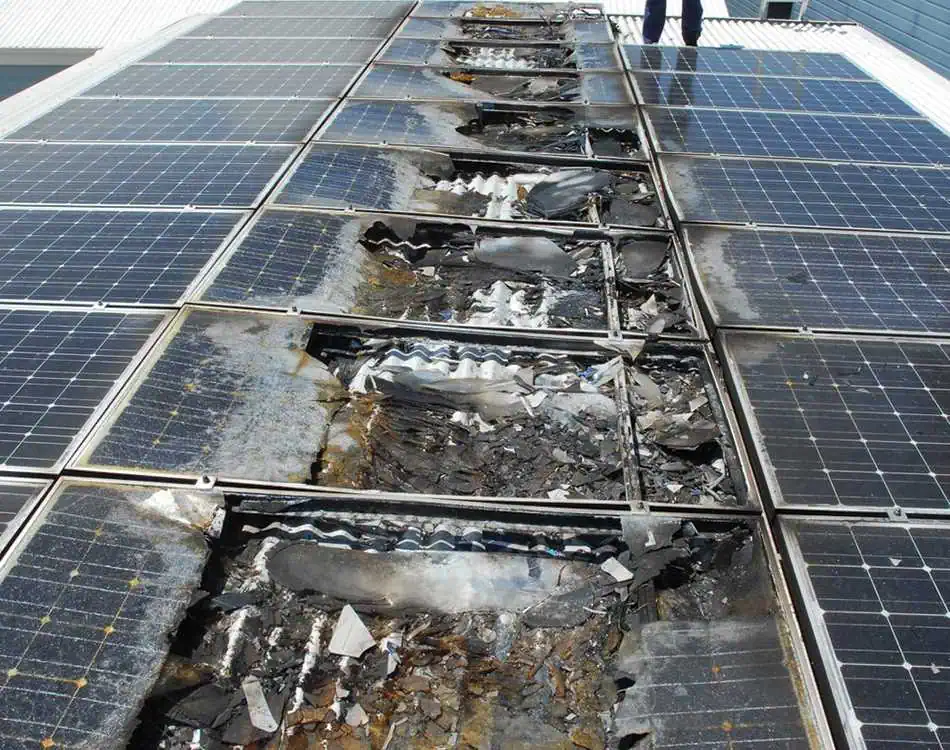
With the increasing adoption of solar energy, safety concerns regarding solar panel fires have arisen. While these incidents are rare, understanding their causes and prevention methods is essential for homeowners and businesses alike.
Understanding Solar Panel Fire Risks
Solar panel fires typically result from preventable issues. The common causes include:
- Poor Installation Practices: Incorrect installation can lead to serious safety hazards.
- Inferior Components: Low-quality materials heighten the risk of overheating and sparking.
- Loose Connections: Wiring can loosen over time, increasing the likelihood of electrical faults.
- Arc Faults: Breaks in connections can cause electricity to arc, generating sparks and heat.
- Environmental Factors: Exposure to moisture or debris can damage insulation and connectors.
How Solar Panels Are Designed to Prevent Fires
Modern solar panels are built with safety in mind. They undergo rigorous testing to meet safety standards set by organizations like the International Electrotechnical Commission (IEC) and Underwriters Laboratories (UL). Features include:
- Fire Resistance Ratings: Panels are classified (Class A, B, or C) based on their ability to resist flames.
- Advanced Detection Systems: Technologies like arc-fault detection and rapid shutdown capabilities minimize risks during emergencies.
Fire Prevention Best Practices
To ensure the safety of solar panel systems, consider these best practices:
- Choose Certified Installers: Work with professionals who adhere to safety standards.
- Schedule Regular Maintenance and Inspections: Regular checks help identify potential issues early.
- Leverage System Monitoring Technologies: Use modern tools to monitor performance in real time.
Conclusion
While solar panel fires are rare, they commonly stem from preventable issues such as poor installation or substandard components. By prioritizing safety through certified installations, quality materials, and regular maintenance, you can enjoy the benefits of solar energy without compromising safety.
For a safe transition to solar energy, consider partnering with certified installers who prioritize your safety and satisfaction! 🌱✨

The Transparent Solar – Power from Glass Revolution
In the midst of our bustling urban landscapes, where space is a coveted resource, innovation finds a way to integrate seamlessly into our environment. Traditional solar panels, while effective, often fall victim to the spatial constraints of city life. But what if the glass surfaces around us—windows, skyscrapers, and even our smartphone screens—could silently generate power without disrupting their transparency or purpose? This is where transparent solar panels come into play.
A Glimpse into Transparent Solar Panels
Transparent solar panels represent a groundbreaking advancement in renewable energy technology. By transforming ordinary glass into an invisible power source, these panels address the spatial challenges posed by traditional solar systems while maintaining the sleek aesthetics of modern architecture. This innovation is more than just a technological feat; it represents a significant step toward a sustainable, energy-efficient future.
The Birth of Transparent Solar Technology
Back in 2014, researchers at Michigan State University (MSU) pioneered the development of the first fully transparent solar concentrator, laying the groundwork for a revolutionary approach to solar energy. Unlike traditional panels, this technology absorbs invisible wavelengths—such as ultraviolet and near-infrared light—allowing visible light to pass through and keeping the glass clear. The absorbed light is then redirected to thin photovoltaic strips at the edges of the panel, where it is converted into electricity.
Since this initial breakthrough, scientists have worked tirelessly to refine the technology, striking a delicate balance between transparency and energy efficiency. Early prototypes achieved only 1% efficiency, but ongoing research has pushed this number closer to 5%, with aspirations for even greater advancements. Richard Lunt, a lead researcher at MSU, envisions these panels transforming every glass surface—from skyscraper windows to smartphone screens—into power sources, fundamentally reimagining how solar energy integrates into our lives.
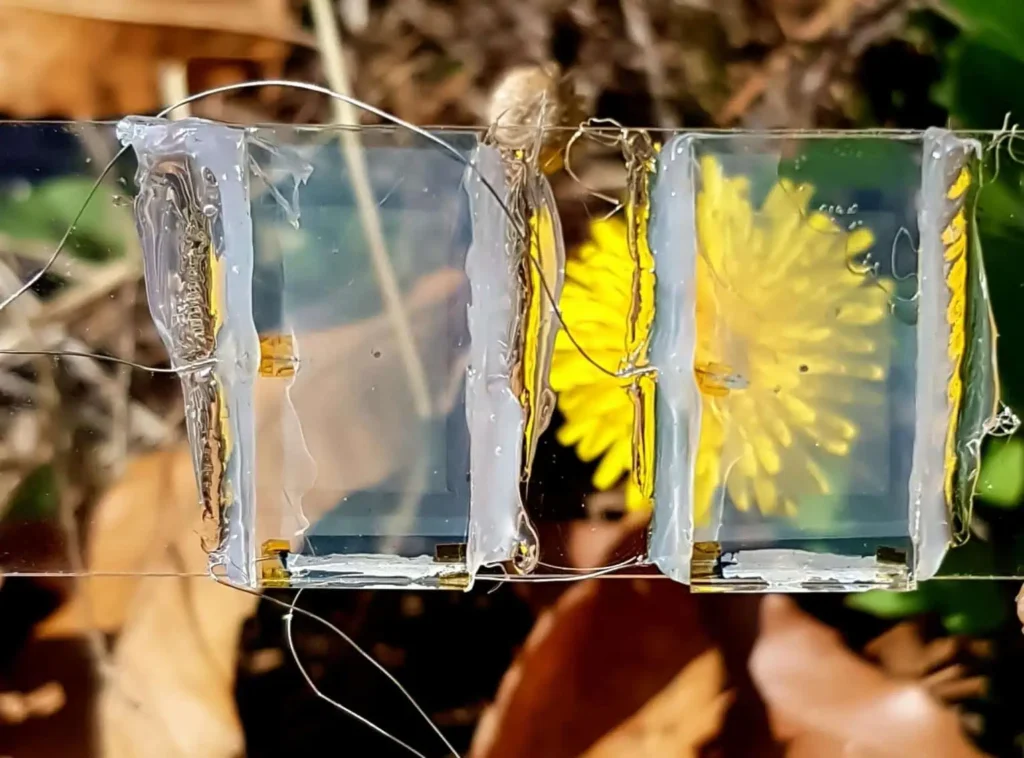
Korean scientists from Incheon National University have taken a small step toward this goal by creating what they call the first completely transparent solar cell A Breakthrough from Korea
Further advancements in transparent solar technology emerged from Incheon National University in Korea. Led by Professor Joondong Kim and documented in the Journal of Power Sources, this breakthrough highlights how innovative materials and smart engineering can propel us toward a carbon-free future.
The Korean team’s design focuses on a critical component of solar cells: the heterojunction, where light is absorbed and converted into electricity. By combining titanium dioxide (TiO₂) and nickel oxide (NiO), two environmentally friendly semiconductors, they developed a system that effectively captures invisible ultraviolet light while allowing visible light to pass through. This clever combination enables electricity generation without compromising transparency.
The Urgency of Transparent Solar Panels
Five years after the Paris Climate Agreement, the world is in a race to transition from fossil fuels to renewable energy sources. Solar power, as one of the most abundant and reliable sources, remains crucial in this transition. Yet, traditional solar panels—being opaque—limit their use to rooftops and large solar farms, often keeping them out of sight and far from where energy is most needed. Transparent solar cells change this paradigm by offering seamless integration of renewable energy into windows, buildings, and even everyday devices like smartphones.
Breaking Down the Technology
Titanium dioxide, widely used in traditional solar cells, stands out for its excellent electrical properties, UV light absorption, and non-toxic nature. Paired with nickel oxide, known for its high transparency and ease of production, researchers have created an efficient and eco-friendly solution. Nickel’s abundance on Earth ensures that this technology can scale affordably and sustainably.
Professor Kim remarked on the potential applications of transparent photovoltaic cells in human technology. Indeed, the possibilities span everything from energy-generating skyscrapers to smart devices powered by sunlight. This innovation doesn’t just signify progress in solar technology—it redefines what’s possible for renewable energy in a world striving for carbon neutrality.
Applications and Efficiency of Transparent Solar Panels
Transparent solar panels are revolutionizing how we perceive renewable energy by embedding it into everyday life. Unlike traditional panels requiring dedicated space, these innovative panels transform windows, facades, and even skylights into power-generating surfaces without obstructing views or compromising design.
A World of Possibilities
The versatility of transparent solar technology opens doors across various industries:
- Buildings and Architecture: Skyscrapers, homes, and offices can incorporate these panels into their windows and facades, creating structures that are both functional and energy-efficient.
- Urban Infrastructure: Public spaces like bus stops and train stations can generate power using glass installations that double as energy sources.
- Consumer Electronics: From smartphones to wearable devices, transparent panels offer a sustainable way to extend battery life without bulky additions.
Efficiency Meets Innovation
Historically, transparent solar panels faced a trade-off: maintaining visibility often came at the cost of energy efficiency. However, advancements in materials like perovskites and organic photovoltaics are closing this gap. Companies like Ubiquitous Energy have developed panels with energy conversion efficiencies reaching 9.8%, a significant leap from the 1% achieved in early models.
As these technologies evolve, their efficiency and affordability are expected to improve further, paving the way for mass adoption. Transparent solar panels are no longer just a concept—they are an emerging reality with the potential to power urban environments while preserving their aesthetic and functional integrity.
The Promise and Challenges of Transparent Solar Technology
Transparent solar panels hold immense promise as a transformative energy solution, but several challenges remain on the path to mass adoption. With a focus on innovation and scalability, this technology is poised to reshape urban sustainability and renewable energy integration.
Economic Viability
One of the main hurdles is economic viability. Current production relies on advanced materials like perovskites and precise manufacturing techniques, making transparent solar panels more expensive than traditional ones. However, as research progresses and production scales up, costs are expected to drop significantly, paving the way for broader accessibility.
Efficiency Concerns
Efficiency remains a critical factor. Transparent panels currently lag behind opaque solar cells in terms of energy conversion rates because maintaining transparency often reduces the amount of light they can absorb. Researchers are addressing this by improving materials like titanium dioxide and nickel oxide and exploring perovskite-based designs to enhance performance without sacrificing visibility.
Shaping the Future of Energy Integration
Despite these challenges, the potential impact of transparent solar panels is immense. By turning windows, facades, and even vehicle glass into power sources, they can seamlessly integrate renewable energy into urban infrastructure without requiring additional land or altering aesthetics. This makes them particularly valuable in densely populated areas where space is limited.
Looking ahead, the vision for transparent solar panels extends beyond technology. It’s about embedding sustainability into our daily lives—creating buildings that power themselves, devices that charge on the go, and cities that thrive on clean energy. With continued innovation and investment, this technology is set to play a vital role in the global transition to carbon neutrality.
A Clear Vision for Renewable Energy
Transparent solar panels aren’t just an invention—they’re a reimagination of how we live with energy. Imagine glass that powers our homes, offices, and cities without us even noticing. It’s not just about solving the problem of limited space—it’s about merging sustainability with the beauty of everyday life. This is innovation that works with us, not against us.
Certainly, challenges lie ahead. Efficiency needs improvement, costs need reduction, and technology must scale up. But isn’t that how all great ideas begin? Step by step, problem by problem until they become unstoppable forces for change. Transparent solar panels are proof that when we rethink what’s possible, we discover solutions hiding in plain sight.
The future of renewable energy doesn’t have to be loud or obvious; it can be quiet, clear, and revolutionary. Transparent solar panels remind us that the answers we seek often blend into the world around us, waiting for us to notice them.
The question is: will we take the next step forward?

Understanding Solar PV Systems: A Guide to Clean Energy
If you are considering clean energy-a transition highly encouraged-you have probably come across the term “solar PV system” numerous times. Without necessarily having to be an expert-that would be our job!-a little background about how a solar PV system works will help you make the right choice for your home or business.
In this article, we will cover:
- What a solar PV system is
- How a solar PV system works
- What is Solar PV System?
Solar PV systems are the perfect way to garner energy from the sun and reduce your carbon footprint.
The second thing to do is to understand what they are and how they work. “PV” is an abbreviation of “photovoltaics.” A solar PV system is a power system that converts sunlight into electricity with the use of the photovoltaic effect.
Basic Principles of Solar PV System
Solar PV panels convert sunlight into electricity with the help of cells. Sun falling on a cell produces an electric field between its layers and allows the flow of electricity. Greater the intensity of light, greater will be the volume of electricity produced.Although the energy generated by a single panel is quite small, the combining of several such panels yields a significantly higher output.
Components of a Solar PV System
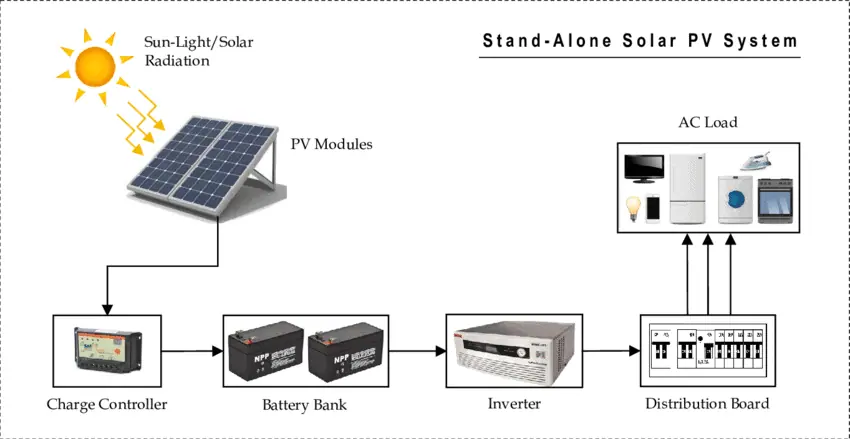
A solar PV system is an integrated collection of two or more solar panels interconnected with an inverter and other electrical and mechanical components:- Photovoltaic modules
- Module mounting structures
- Inverter
- Electrical cables
Of course, different-sized systems do exist: rooftop installations and portable systems up to utility-scale generation plants.How a Solar PV System Works
A solar PV system may operate in the following manner:- They can be an off-grid stand-alone systems, completely disconnected from the traditional power grid.
- They can be connected to the utility grid.
- They can be grid-tied, the most common type of residential solar system worldwide.
To know more about the types of Solar PV systems, read our article on Types of Residential Solar Energy Systems.
How a Solar PV System Works
One of the first things to learn about how solar PV systems work is the difference between direct current and alternating current.Solar panels are designed to generate DC electricity, which implies that electrons move in only one direction. However, homes and buildings operate by using AC, where the electric charge periodically reverses direction for efficiency and minimum losses in transmission. Therefore, this DC electricity will have to be converted into usable AC electricity by an inverter.
Any building on the electrical grid has some sort of utility meter that is used for measuring and feeding power. So, when the installation of solar panels is done on your roof, they tie into your home’s utility meter, thereby giving you access and visibility into the energy your solar system produces.
When your solar power system produces more electricity than what you consume, the excess goes back onto the grid.
If you are interested in solar batteries, we have one post discussing the ins and outs on surplus energy.
How a Solar System Works in 6 Steps
- The photovoltaic cells within your solar panels absorb sunlight and convert solar energy into electricity.
- These cells are made of semiconductor materials such as silicon.
- Sunlight absorbed by the semiconductor; that is exactly what enables it to dislodge electrons from their positions.
- The electrons that are freed consequently carry a negative charge and flow towards the front surface of the cell.
- This results in the back becoming positively charged relative to the front, thereby creating a voltage potential between the front and back of the cell, in a manner of speaking similar to battery terminals.
- The current that is collected by wires can be used immediately or stored in a solar battery for later.
- Contrary to the myths people have regarding solar, the cells can generate electricity during cloud cover days, though not as compared to sunny days, as shared in our article, “10 Solar Myths and Facts You Need to Know.”
Advantages of a Solar PV System
A significant advantage of a solar PV system is that it operates on its own. It doesn’t need to be turned on and off at all times; the sunlight does this job automatically.You also do not have to switch in and out of solar power and grid power; your solar system automatically switches when this happens, depending on how much energy you consume. Another added advantage is that solar systems hardly require any maintenance, and hence you might not even notice they are present.
Conclusion
The takeaway from that would be that the photovoltaic cells on your solar PV system absorb sunlight and convert it into DC electricity. The inverter then converts the DC electricity into AC so that it is at its most efficient when being transmitted. Congratulations, you now understand a fair amount about solar PV systems!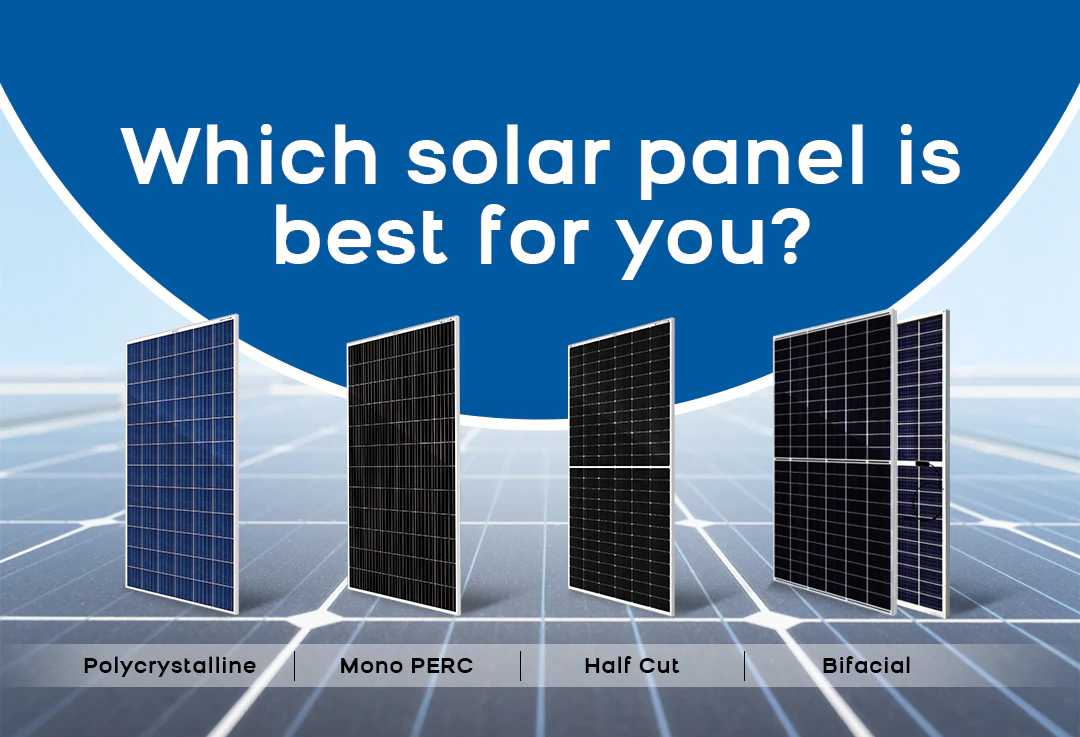
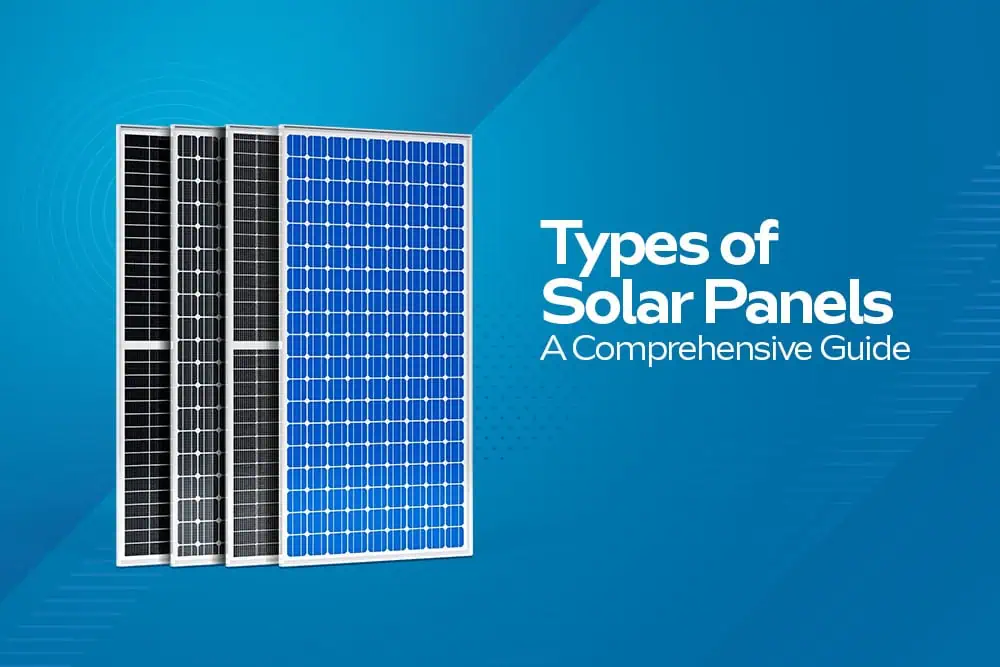
Comprehensive Guide to Solar Panel Types
Introduction to Solar Energy
The sun produces an incredible amount of energy, enough to cover the world’s energy needs for an entire year in just one minute. Solar energy is not only reliable and sustainable, but it also offers a cost-effective way to generate electricity. As the demand for renewable energy grows, understanding the different types of solar panels becomes essential.
What is a Solar Panel?
Solar panels convert sunlight into electricity through the photovoltaic effect. They consist of solar cells made from silicon, boron, and phosphorus. When sunlight hits these cells, it knocks electrons loose, creating a flow of electricity. This process defines solar panels as photovoltaic (PV) panels.
Types of Solar Panels
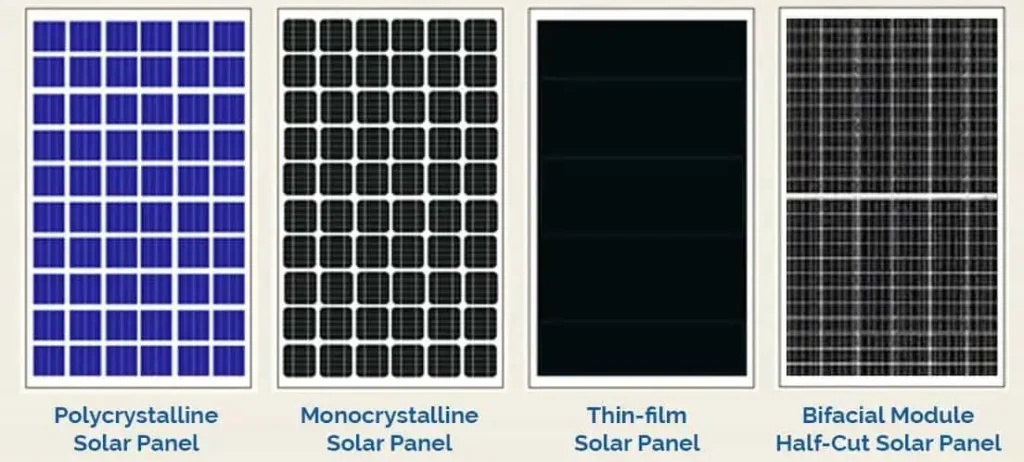
There are several types of solar panels available today, each with its strengths and weaknesses. The main categories include:
- Monocrystalline Solar Panels
- Polycrystalline Solar Panels
- PERC (Passivated Emitter and Rear Cell) Panels
- Thin-Film Solar Panels
1. Monocrystalline Solar Panels
Monocrystalline panels are made from single, pure silicon crystals, giving them their characteristic dark color and rounded edges. They are known for their high efficiency (over 20%) and space efficiency, making them ideal for limited spaces. However, they are also the most expensive option due to the energy-intensive manufacturing process.
Advantages:
- High efficiency
- Long lifespan
- Space-efficient
Disadvantages:
- Higher initial cost
- Some older models may suffer from light-induced degradation.
2. Polycrystalline Solar Panels
Polycrystalline panels are made from multiple silicon crystals melted together. They are typically blue with a speckled appearance and are less expensive than monocrystalline panels, making them a popular choice for budget-conscious consumers. However, they have lower efficiency (15-17%) and space efficiency.
Advantages:
- Lower cost
- Less silicon waste during production
Disadvantages:
- Lower efficiency
- Shorter lifespan compared to monocrystalline panels
3. PERC Panels
PERC panels enhance the traditional monocrystalline design by adding a passivation layer on the rear surface. This layer increases efficiency by reflecting unabsorbed sunlight back into the cell and reducing electron recombination. PERC panels can achieve higher efficiency than standard monocrystalline panels.
Advantages:
- Higher efficiency (up to 5% more than traditional monocrystalline)
- Smaller physical footprint for the same power output
Disadvantages:
- Slightly more expensive than traditional monocrystalline options
4. Thin-Film Solar Panels
Thin-film panels are made by depositing photovoltaic materials onto a substrate, resulting in lightweight and flexible panels. They can come in various sizes and are easier to install, but they generally have lower efficiency (6-15%) than crystalline options.
Advantages:
- Lower cost
- Flexible installation options
Disadvantages:
- Lower efficiency
- Shorter lifespan
Variations of Thin-Film Panels
Thin-film technology includes several materials:
- Cadmium Telluride (CdTe): Cost-effective but toxic in nature.
- Amorphous Silicon (A-Si): Low efficiency but very low production costs.
- Copper Indium Gallium Selenide (CIGS): Offers higher efficiency than other thin-film types.
Efficiency Comparison Among Panel Types
Panel Type Efficiency Rate Monocrystalline 20% and up PERC Up to 25% Polycrystalline 15-17% CIGS 13-15% CdTe 9-11% A-Si 6-8% Power Capacity of Solar Panels
Monocrystalline panels typically offer the highest power capacity, with outputs up to 300W per panel. Polycrystalline panels can generate between 240W and 300W. Thin-film panels vary widely in capacity based on their size.
Cost Analysis of Solar Panels
Here’s a breakdown of the average cost per watt for different types of solar panels:
Panel Type Average Cost per Watt PERC $0.32 – $0.65 Monocrystalline $1.00 – $1.50 Polycrystalline $0.70 – $1.00 CIGS $0.60 – $0.70 CdTe $0.50 – $0.60 A-Si $0.43 – $0.50 Generations of Solar Panels
Overview of Solar Panel Generations
Solar panels can also be categorized by their generation, which refers to the technology used in their production and their efficiency levels. Here’s a look at the three main generations:
Table: Generations of Solar Panels
Generation Type Efficiency Rate Advantages Disadvantages 1st Generation Monocrystalline & Polycrystalline ~15% – 20% Proven technology; high efficiency Higher costs; limited innovation 2nd Generation Thin-Film Solar Cells ~7% – 15% Flexible; lower cost; lighter weight Lower efficiency; shorter lifespan 3rd Generation Advanced technologies (e.g., organic PV) Up to 41% High potential efficiency; innovative materials Mostly in research phase; commercialization challenges 1st Generation Solar Panels
These panels consist mainly of monocrystalline and polycrystalline technologies that are widely used and trusted in various applications.
2nd Generation Solar Panels
This generation includes thin-film technologies that allow for flexibility and lower production costs but typically at the expense of efficiency.
3rd Generation Solar Panels
These are experimental technologies that promise high efficiency and sustainability but are still largely under research or development phases.
Other Considerations When Choosing Solar Panels
Temperature Coefficient
Higher temperatures can impact solar panel performance. Monocrystalline and polycrystalline panels have a temperature coefficient between -0.3% to -0.5% per °C, while thin-film panels can be around -0.2% per °C, making them suitable for hotter climates.
Fire Rating
Solar panels must meet fire safety standards that align with the fire rating of the roofs they are installed on.
Hail and Hurricane Ratings
Solar panels undergo rigorous testing for hail impact resistance. Crystalline panels tend to withstand impacts better than thin-film types.
Light-Induced Degradation (LID)
LID can cause a decrease in power output during the first few hours of sunlight exposure, particularly in crystalline panels due to manufacturing residues.
Summary: Comparing Solar Panel Types
Feature Monocrystalline Polycrystalline PERC Thin-Film Initial Cost Highest Lower Middle Variable Efficiency 20% and up 15-17% Highest Lowest Appearance Black Blue Black Variable Advantages High efficiency Cost-effective Space-efficient Flexible Disadvantages Expensive Lower efficiency Higher initial cost Short lifespan Which Solar Panels are the Best? Find Out Here
Each and every type of solar panel consists of different capabilities. However, there are some points of difference in each of them. They may differ in their efficiency, cost, and capacity. Let’s quickly understand their difference:
Solar Panel Types Efficiency Cost(Approx. Avg Cost per Watt) (in dollars) Capacity(Watt per Panel) Monocrystalline solar panels 20% or more 1 – 1.50 up to 300w Polycrystalline solar panels 15 – 17% 0.70 – 1 around 240 – 300w PERC 25% or more 0.32 – 0.65 Greater than or equal to 300w Thin-film solar panels Less than or equal to 15% 0.44 – 0.70 It is variable however, it contains capacity less than others 
Conclusion: Choosing the Right Solar Panel Type
Selecting the appropriate solar panel depends on your specific needs and environmental conditions. For limited spaces, monocrystalline or PERC panels are ideal due to their efficiency. For larger properties where cost is a concern, polycrystalline may be suitable. Thin-film panels work best in situations where flexibility is required or where installation is challenging.
By understanding the different types of solar panels and their characteristics, you can make an informed decision that aligns with your energy needs and budget, paving the way for a sustainable future.
N-Type vs. P-Type Solar Panels: Choosing the Right Option
The solar energy market offers various technologies, with N-Type and P-Type panels being the most prevalent types of solar cells. While both types generate electricity by converting sunlight into usable energy, they have distinct properties that can significantly impact their performance, longevity, and cost-effectiveness. Understanding these differences is essential for making an informed decision about which solar panel type best suits your needs.
Key Differences Between N-Type and P-Type Solar Panels
1. Manufacturing Process
P-Type Solar Panels:
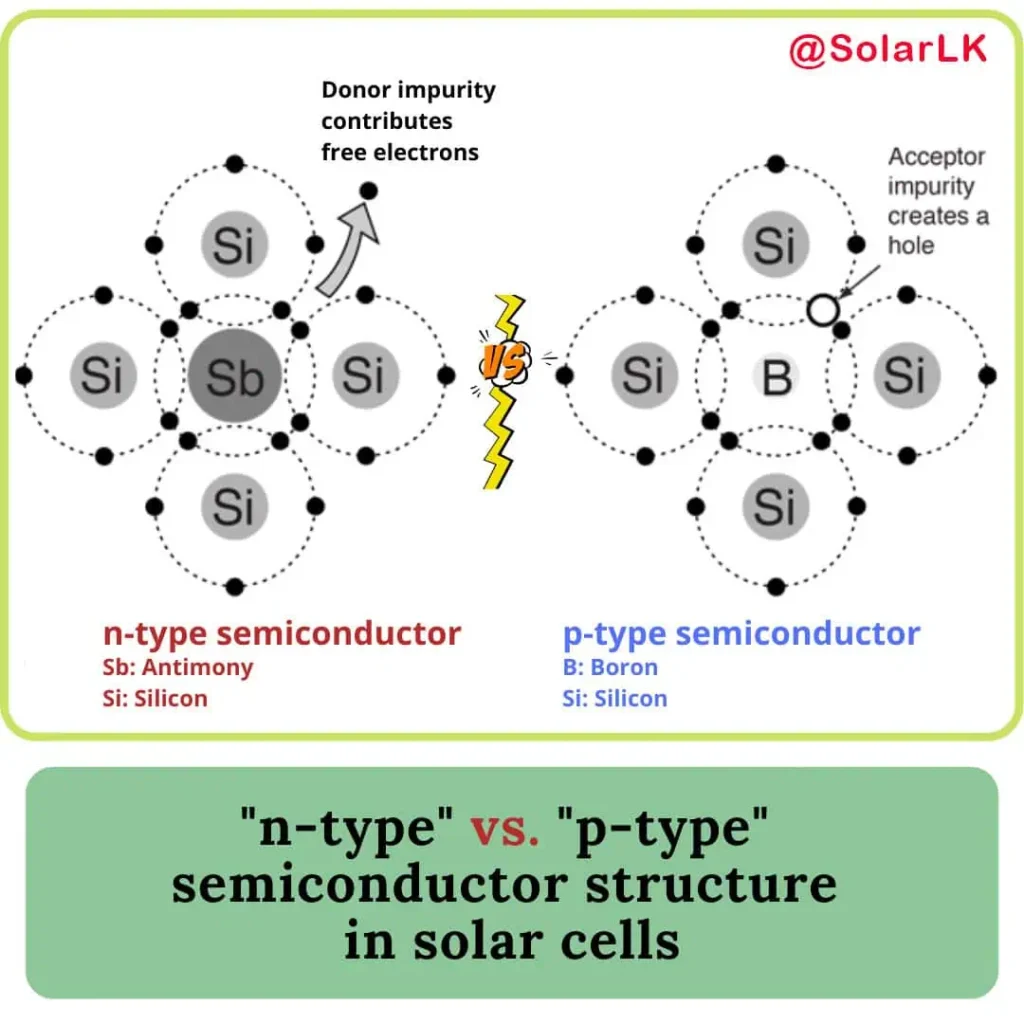
- P-Type solar panels are made using silicon doped with boron, which has fewer electrons than silicon. This doping creates “holes” in the silicon structure, allowing for positive charge carriers.
- The manufacturing process for P-Type panels is well-established and has been optimized over decades, resulting in lower production costs.
N-Type Solar Panels:
- N-Type panels use phosphorus to dope silicon, introducing extra electrons into the material. This creates a surplus of negative charge carriers, enhancing electrical conductivity.
- The production process for N-Type panels is more complex and requires advanced technology, leading to higher manufacturing costs compared to P-Type panels.
Aspect P-Type Solar Panels N-Type Solar Panels Doping Element Boron Phosphorus Charge Carriers Positive (holes) Negative (electrons) Manufacturing Complexity Well-established, simpler process More complex, advanced technology Production Costs Lower production costs Higher production costs 2. Efficiency
P-Type Efficiency:
- P-Type solar panels generally achieve efficiencies around 23.6%. While this efficiency has improved over the years, it still lags behind N-Type panels.
- The thicker base layer of P-Type cells allows for better sunlight absorption but can lead to increased recombination losses, where electrons recombine with holes before generating electricity.
N-Type Efficiency:
- N-Type panels typically boast higher efficiencies, averaging about 25.7%, primarily due to better electron mobility and reduced recombination losses.
- The thinner emitter layer of N-Type cells allows for more efficient collection of generated current, making them a preferred choice for maximizing energy output.

Aspect P-Type Efficiency N-Type Efficiency Typical Efficiency Approximately 23.6% Approximately 25.7% Recombination Losses Higher due to thicker base layer Lower due to thinner emitter layer Electron Mobility Lower compared to N-Type Higher due to improved material properties 3. Temperature Performance
P-Type Temperature Sensitivity:
- P-Type panels experience a more significant drop in efficiency as temperatures rise. The temperature coefficient for P-Type cells is approximately -0.50%/°C, meaning their efficiency decreases with increasing heat.
- This characteristic makes P-Type panels less suitable for extremely hot climates where consistent high temperatures could negatively impact performance.
N-Type Temperature Performance:
- N-Type panels exhibit better performance in high-temperature conditions, with a lower temperature coefficient around -0.30%/°C. This means they retain higher efficiency levels even under intense sunlight and heat.
- Their superior thermal performance makes them ideal for regions that experience elevated temperatures, ensuring better energy generation throughout the day.
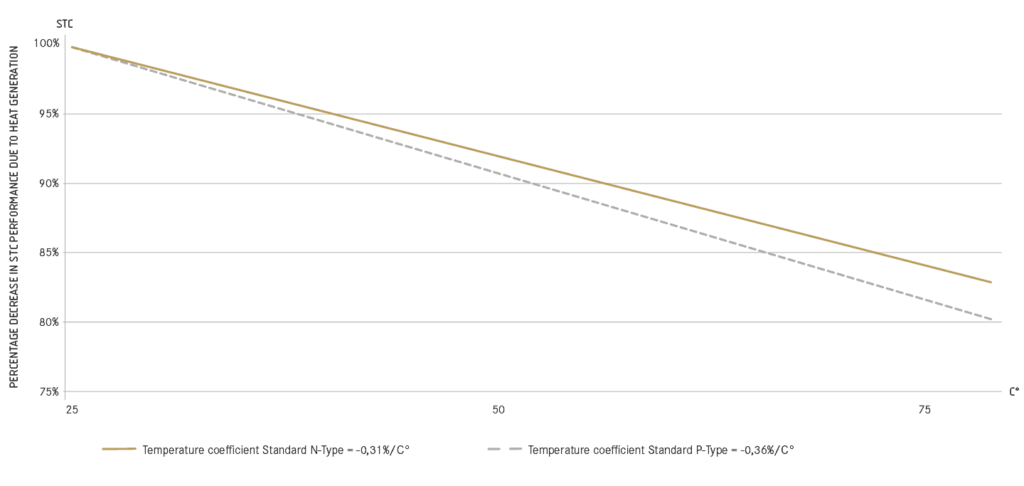
Aspect P-Type Temperature Performance N-Type Temperature Performance Temperature Coefficient About -0.50%/°C About -0.30%/°C Performance in Heat Decreases significantly in high temperatures Maintains efficiency better in hot conditions 4. Longevity
P-Type Lifespan and Degradation:
- P-Type solar panels are more susceptible to light-induced degradation (LID), which causes power loss shortly after installation due to sunlight exposure. This degradation can result in up to a 3% reduction in efficiency during the first few hours of exposure.
- They are also vulnerable to potential-induced degradation (PID), where stray currents lead to reduced performance over time. As a result, P-Type panels tend to have slightly shorter lifespans compared to their N-Type counterparts.
N-Type Lifespan and Durability:
- N-Type solar panels are designed to withstand various degradation factors better than P-Type panels. Their unique structure makes them immune to LID, allowing them to maintain efficiency over time.
- Studies suggest that N-Type panels can last longer, often exceeding 30 years of operational lifespan with minimal degradation. Their resistance to PID also contributes to their longevity.
Aspect P-Type Lifespan and Degradation N-Type Lifespan and Durability Light-Induced Degradation (LID) More susceptible to LID Immune to LID Potential-Induced Degradation (PID) More prone to PID More resistant to PID Typical Lifespan Around 25 years Often exceeds 30 years 5. Cost
P-Type Cost Considerations:
- P-Type solar panels are generally more affordable due to their simpler manufacturing process and widespread availability. They represent the majority of the solar market, making them an accessible choice for many consumers.
- However, while they offer lower upfront costs, their susceptibility to degradation may lead to higher replacement or maintenance costs over time.
N-Type Cost Considerations:
- N-Type solar panels have higher initial costs due to advanced materials and complex production processes. This higher price point can be a barrier for some consumers, especially those on a tight budget.
- Despite the higher upfront investment, N-Type panels can lead to greater long-term savings through increased efficiency and lower degradation rates, making them a cost-effective option over the lifespan of the system.
Aspect P-Type Cost Considerations N-Type Cost Considerations Initial Cost Generally lower Typically higher Long-term Savings Higher replacement or maintenance costs Lower degradation leads to long-term savings Environmental Impact
Both N-Type and P-Type solar panels contribute positively to environmental sustainability by generating clean energy from sunlight. However, it’s crucial to consider the manufacturing process’s sustainability as well:
- P-Type Production: The established manufacturing processes for P-Type panels have been optimized for efficiency but may not incorporate as many sustainable practices compared to newer technologies.
- N-Type Production: With advancements in technology, many manufacturers are focusing on sustainable practices in producing N-Type panels, potentially reducing their carbon footprint.
When choosing between the two types, it’s important to evaluate not only performance but also the environmental impact of the manufacturing processes used by different manufacturers.
Which Should You Choose?
Choosing between N-Type and P-Type solar panels ultimately depends on your specific needs and circumstances:
- Choose P-Type if:
- You are looking for a cost-effective solution with lower upfront investment.
- You require readily available solar panel options for standard installations.
- Your installation site is not subjected to extreme temperatures or environmental conditions that could affect panel performance.
- Choose N-Type if:
- You prioritize long-term efficiency and durability over initial costs.
- Your location experiences high temperatures or variable weather conditions that may affect performance.
- You want a system with less susceptibility to degradation over time for better long-term savings.
Conclusion
In summary, both N-Type and P-Type solar panels offer unique advantages and disadvantages that cater to different needs and preferences. Understanding these differences can empower consumers to make informed decisions that align with their energy goals and financial circumstances.
Whether you choose N-Type or P-Type solar panels, both options contribute significantly to harnessing renewable energy and reducing reliance on fossil fuels, thus playing a vital role in creating a more sustainable future.
Before making your decision, consult with your solar provider about your specific situation and preferences. They can help guide you toward the best choice for your home or business based on local conditions, energy needs, and budget considerations.
Solar Panel Maintenance: Common Issues and Solutions
Investment in solar panels is one of the finest decisions for our planet to be more sustainable, to bring a positive change. Besides, it will save you a lot in terms of energy bills. The general rule is that solar panels require little or no maintenance. This article will help you learn about general problems and their solutions related to solar energy.
Inefficiency Issues with Solar Panels: Probably the most common problem faced by solar panels has to do with their inconsistent efficiency with regard to converting sunlight into usable energy. Indeed, a host of factors may affect the productivity of solar panels, like incorrect installation, inappropriate orientation, shading by trees or buildings in close proximity, and even the deposit of dirt or other debris on the panels themselves. Fortunately, their efficiency can be enhanced by placing them in the best sunlight-exposed areas and keeping them clean. Also, investment in the tracking system for solar panels is rewarding since these systems move around the panels throughout the day to keep them at the most active sun-exposure position.
Vulnerability to Severe Weather Conditions
Solar panels are very vulnerable in case of severe weather conditions like high winds, hail, or lightning strikes. The panels either get damaged, or the electrical components that connect the solar panels to the solar energy system get damaged. To protect your solar panels from bad weather, ensure that they are installed by a knowledgeable professional and regularly inspected to maintain tight connections and check for any damaged parts.
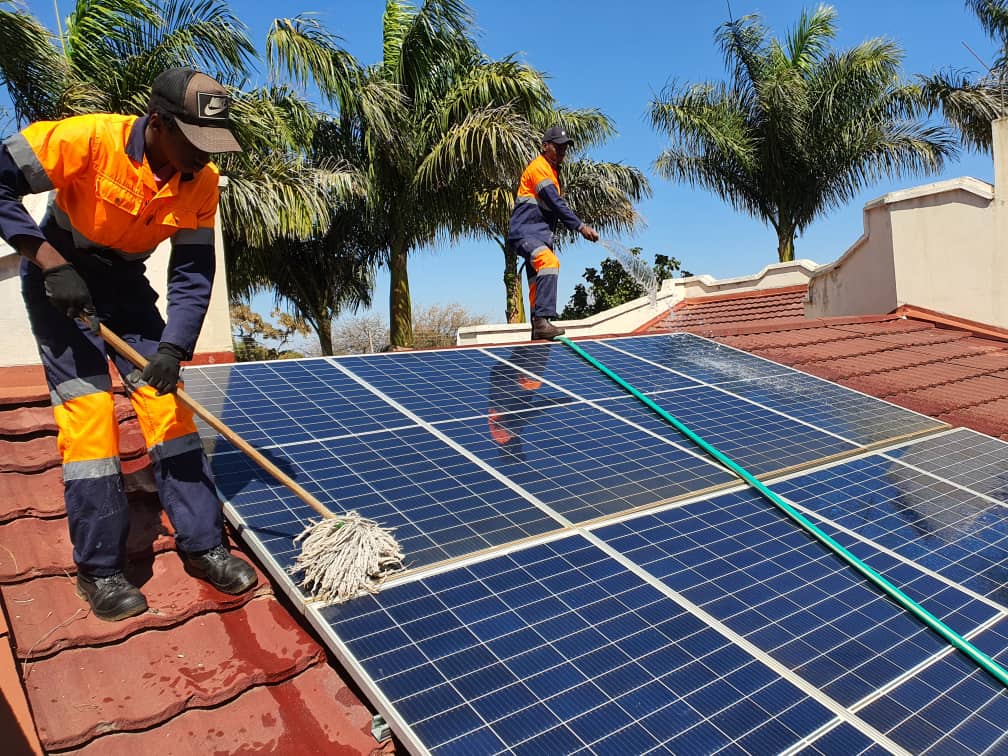
The efficiency of solar panels requires regular cleaning and maintenance. Being outdoors, these panels are affected by the action of the elements, which accumulate dirt and debris on their surfaces. If not regularly cleaned, this may reduce their effectiveness in sunlight absorption, thus impacting negatively on overall efficiency. To increase longevity, clean them regularly and annually have them checked by a professional to ensure the system operates correctly.
Risk of Theft
Solar panels risk theft, especially in cases involving installations in secluded areas, such as rural properties. The installation of panels in less accessible areas and taking advantage of security systems, such as alarms or surveillance cameras, may help in avoiding theft.
For more insightful content, follow our LinkedIn page below.
Aesthetic Concerns
A number of people feel that solar panels are unattractive in their size or the way they are mounted on rooftops. If you feel that aesthetics are important, then place them in less conspicuous areas or invest in covers that could camouflage them with color or design, making them more complementary to the outside of your home.
The solar panels are connected to the electrical grid, and therefore, a lot of problems in connection, such as loose wiring or breaks, may be given. These may be manifested as a loss of power, including possible fire hazards in extreme cases. Most of these electrical issues can be substantially reduced when one gets his or her solar system installed by a qualified professional and scheduled inspections.
Inverter Failures
Inverters are responsible for converting the DC electricity that is coming from the panels into AC electricity, which is usable in your household. This will result in a loss of power or fire hazard if there is any malfunction here. Proper installation and regular inspection of the system are highly recommended to avoid this kind of problem while monitoring its display for error messages.
Battery Problems
Most of the off-grid solar systems have a tendency to use various sorts of batteries for storing electricity. As a matter of fact, they might get affected by several other issues like sulfation, overcharging, or undercharging of the batteries. Lack of maintenance related to those batteries might result in power outrages or even fire hazards. Professional installation and periodic inspection will surely help in the avoidance of problems related to batteries.
Panels are prone to destruction under extreme atmospheric conditions such as strong winds or hailstones. Install them in the most protected locations and be on the lookout for potential damage marks.
Price
This is also considered to be a general misconception about solar panel installations-that it costs too much, just like its high maintenance cost. Although prices have recently gone down, the initial investment to be made can still be very substantial, and regular maintenance may be required for its optimal performances. In order to alleviate any type of cost concern, consider availing of government incentives such as tax credits or rebates, and consider financing options such as through loans or lease programs.
Hot Spots
Hot spots are a result of electrical malfunctions inside the panels, and are often associated with incorrect installation or cuts in wiring. This could further cause power loss and even fire hazards. In this case, hot spots can be prevented by standard inspections, staying on top of tight connections, and monitoring the panel display for any error alerts.
PID effect
This is possible when electric potential can build up on the surface over time, consequently impacting performance; PID takes place because of either improper installation or extreme temperatures. Professional installation with regular inspection can be done to prevent PID.
Soiling
The cleanliness of the solar panel is related to the efficiency of operation. Dust, pollen, bird droppings, and leaves might block the sunlight that reaches the panels. Regular cleaning and inspections will hold the panel in optimal performance.
Accumulation of Snow
Snow reduces the generation capacity of a panel, or it may even cause physical damage to the panel if it stays for too long. Cleaning and inspections shall be done regularly to resolve all snow-related issues.
Birds
Birds can cause significant damage by building their nests on solar panels or pecking on the surface, and droppings can be a different reason that affects efficiency. Regular cleaning and inspections help in preventing such conditions.
Snail Trails
Snails’ trails reduce the performance and can possibly cause damage if large amounts start to build up. These threats need regular inspection and cleaning.
Insect Infestation
Insects can physically damage panels as a result of nesting on them or leaving droppings that may interfere with operation. Cleaning is important in prevention.
Roof Damage
In case the solar panels are mounted on the roof, be aware of the possible damage that could be caused to the roof from the improper installation of the solar panels, which could result in leakage or other problems. Regular checks will be necessary to assure you that the installation was done correctly and that no damage has been done.
Conclusion
Solar panels are a fantastic opportunity to save money on energy and to protect the environment. However, one has to know things about maintenance, too, so that they could last longer. These procedures will include routine inspections for damage or deterioration and routine cleaning of the standard ones you should do to maintain your solar energy system.
Repairing Cracked Solar Panels: Effective Methods and Insights
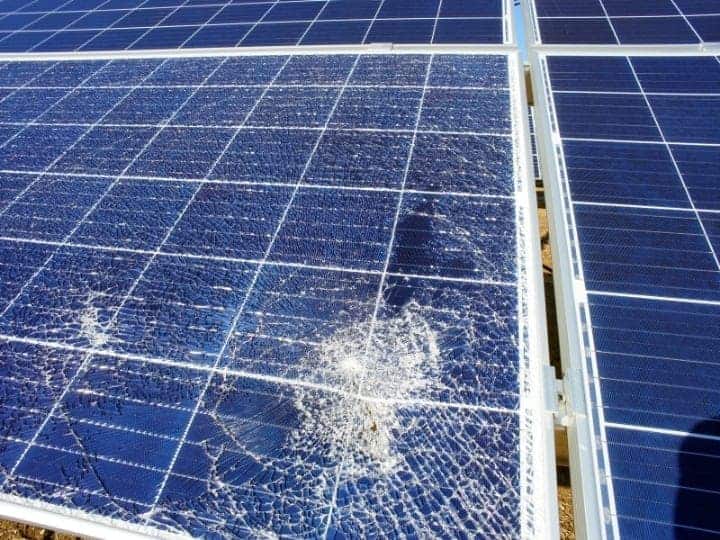
Cracked solar panels can be a very serious problem for solar system owners. Although it is not often experienced, this could be a problem developed through time due to several reasons: thermal cycling, weather condition issues, and improper handling.
This article will walk you through steps on how to repair cracked solar panels, considering two major techniques: covering the panel with laminating film and using polyurethane.
In this work, we will look into what causes the panels to crack, explain why repairs are necessary, and go further to provide a step-by-step guide on how to undertake each of these methods of repair. An understanding of these methods might put you in a position to save some replacement costs by increasing the life of your solar panels.
It is, however, paramount to note that these practices are most effective if the crack issue is minor and that major damage may require a professional assessment or even replacement of the panel.
Can a Cracked Solar Panel Be Repaired?
Many homeowners, upon experiencing a cracked solar panel, are always kept guessing whether there is a way of fixing it without being burdened with expensive replacement costs.
Thankfully, in regard to small cracks, yes, there do exist some repair ways that will grant your solar panel an extended service life and functional efficiency.
The most accessible techniques in a self-sufficiency philosophy for the repair of cracked solar panels are laminating film and polyurethane.
Application of the laminating film involves laying a clear, waterproof film over the cracked panel and bonding it by using heat from a heat gun. That keeps it protected against moisture and keeps loose fragments of glass in place.
On the contrary, the polyurethane method involves the application of a quick-drying, weather-resistant coat of polyurethane over the panel. This liquid adhesive goes into the gaps, sealing the cracks and bonding together the shattered glass.
These techniques may work quite well for minor cracks, but one should not be oblivious to the fact that they are not infallible. For those panels that are badly damaged or if pieces of glass have started to flake off, these repair methods may not work effectively.
But in such cases or whenever you feel that the area of destruction is more than just trivial, it’s recommended you seek the service of a professional solar installer who will be in the better place to assess the condition and recommend the best course of action, which can be taken and may include replacement of the panel.
Common Causes of Cracked Solar Panels
Before discussing the techniques of repair, it is important to understand what causes cracks in solar panels in the first place. These causes will also help in preventing future damage and increase the life expectancy of your solar system.
Thermal Cycling
The primary causes of cracked solar panels are thermal cycling. During the day, there is a heat and cool cycle of the solar panels that consists of expansion and contraction of the materials. This can be repetitive enough to create micro-cracks in the glass layer, which over time may grow and develop into larger fractures.Dynamic or Cyclic Pressure Loads
The panels can sustain some high winds and bad weather that may cause the panels to twist or bend moderately. As a result of these forces, there is a mechanical stress inside the glass layer that will finally cause the crack.Hail Storms
Though solar panels are designed to bear elements of the weather, constant drumming by the hailstones can have a cumulative grinding effect on the surface of the glass, causing cracks eventually.Improper Transportation and Handling
It is also during transportation or at installation that damage due to mishandling may occur. Dropping, bumping of panels or shifting during transport causes the panels to crack or have other structural defects.Installation on Non-Planar Surfaces
The installing of solar panels on uneven surfaces creates points of stress which lead to bending or twisting of panels. This constant stress encourages the formation of cracks with time.Manufacturing Faults
Sometimes, panels leave the factory with defects that are in the form of micro-cracks. These are further exacerbated by environmental factors with time.Why Cracked Solar Panels Need to Be Repaired
Cracked panels in your solar system need your prompt attention to ensure that it works efficiently and lasts longer. Here are some reasons why:
Water and Moisture Resistance Compromised
The glass layer of a solar panel mainly provides protection from environmental factors internally. Once fissures appear, water can get into the panel and cause short circuits and damage to internal parts. In worst conditions, it can cause safety risks like electrical fire and electrocution hazards.Flaking off Glass Surface
This causes parts of the surface glass to start flaking off with the development of fractures. In turn, this exposes internal parts directly to environmental hazards, greatly reducing the efficiency and life of the panel.Methods of Repairing Cracked Solar Panels
Now that we understand the need for taking care of cracked panels, let’s look at two effective methods of repair:
Method 1: Encasing the Panel with Laminating Film
This is simple, low-cost, and quite efficient if the crack is small.
Materials Needed:
- Transparent laminating film
- Heat gun
- Squeegee or squiggle tool
Step-by-Step Process:
- Place the laminating film on top of the cracked solar panel.
- With the squeegee, spread out the film while eliminating any bubbles or folds between the panel surface and the film.
- Use the heat gun to bond the laminate film to the panel surface.
- This technique creates a waterproof barrier that keeps moisture at bay from ingressing, at the same time keeping glass pieces together, minimizing further flaking.
Method 2: Applying Polyurethane
Another efficient and much less costly repair method for broken solar panels includes the use of polyurethane.
Materials Needed:
- Fast-drying polyurethane-make sure it is water and weather-resistant
- Mixing container
- Squeegee or scraper
Step-by-Step Operation:- Level the panel using a spirit level to ensure uniform coverage.
- Clean the panel thoroughly.
- Mix the polyurethane following the instructions on the manufacturer.
- Pour the majority of the polyurethane over the panel but leave some portion for reserve.
- Even out the squeegee or scraper over the surface with the polyurethane.
- Wait a few minutes for it to seep into the cracks.
- Fill in low spots with the remaining polyurethane.
- Let the panel fully dry out.
- Allow additional coats to take as needed to finish.
- The process tends to seal the cracks, which prevents moisture entry and helps keep the pieces of glass together in their places.
Effectiveness of the Various Methods of Repair
Success of these methods of repair largely depends on the extent of the damage:
Small Cracks:
Although the technique will work in a panel with just minor cracks, the laminating film and polyurethane methods work quite well. They are indeed capable of preventing the water from passing through and the flaking off of the glass, to prolong the life of a panel immensely.Extreme Damage:
These repair methods might not be as successful if the solar panels have extensive cracking or the glass pieces have already begun breaking off. They still might offer some sort of protection but can’t return the panel to its original state and can’t stop further efficiency degradation.Replacement over Repair: When to Decide
Sometimes, it pays much more to replace a panel rather than trying to fix it:
In cases where the cracks are so diffused that they occupy a big part of the panel area; A critical drop in efficiency was found to have resulted. Internal components have been severely damaged by water or other external factors. The cost for repair is close to what it would cost to have a new panel installed. With the glass theoretically replaceable, the low efficiency and high cost that it actually makes more sense to replace the panel as a whole.
ConclusionCracked solar panels can do serious damage to the performance and lifespan of your solar system, but most importantly, it can be unsafe.
The techniques shown here in this article are primarily useful for fixing minor cracks either by laminating film or applying polyurethane as an aid to block moisture intrusion which would eventually cause greater damage.
Keep in mind, however, that these do-it-yourself procedures are best suited for minor issues. If the cracks are widespread, or you are quite unsure about the extent of the damages, it always behooves you to seek advice from a professional solar panel installer. They will make a more competent assessment and advise you on what to do and whether some adjustments or replacement is called for.
Consistent checking of the solar panels can help find any faults in their early stages for easier repair and maybe altogether avoidance of replacement costs.
By understanding what has caused the crack and how to deal with it, you will be able to make sure that your solar investment keeps producing clean and efficient energy for many more years to come.
How to find a Best Home Solar Provider
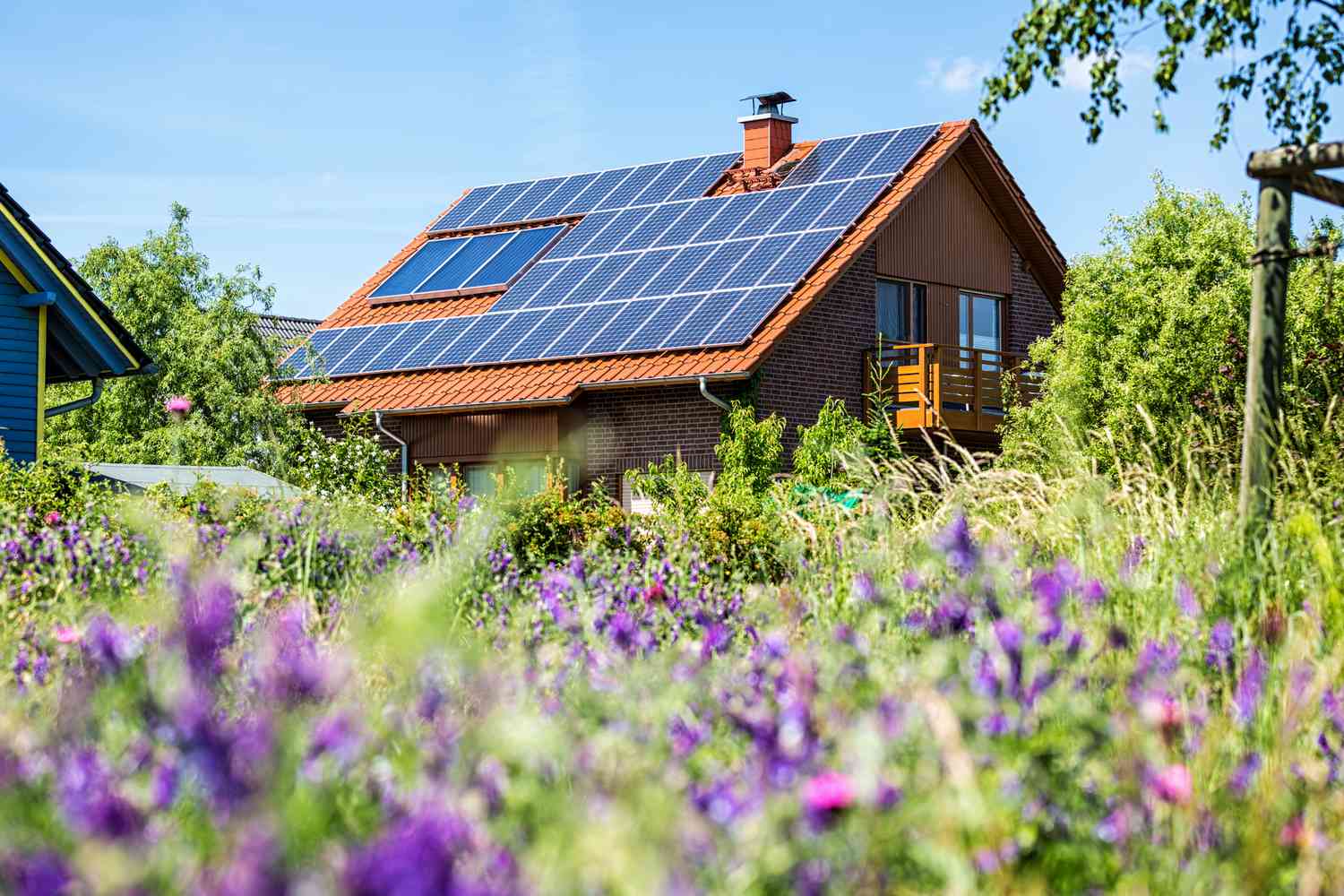
As the world continues to shift towards renewable energy, many homeowners are considering installing solar panels to reduce their carbon footprint and save on energy costs. However, choosing the right solar provider can be a daunting task, with so many options available in the market. In this article, we will guide you on how to find the best home solar provider that suits your needs.
- Research and compare providers The first step in finding the best home solar provider is to research and compare different providers. Look for providers that have a good reputation in the market and have been in business for a while. Check their website and read reviews from previous customers to get an idea of their service quality. Compare their pricing, warranties, and equipment to find the best deal.
- Check for licenses and certifications Ensure that the solar provider you choose has all the necessary licenses and certifications to install solar panels in your area. These certifications vary by state, so make sure the provider you choose is licensed in your state.
- Look for experience and expertise Experience and expertise are crucial when it comes to choosing a solar provider. Look for providers that have been in business for a while and have a proven track record of successful installations. They should have a team of trained and certified installers who can handle the installation process effectively.
- Check the quality of equipment The quality of solar equipment can significantly impact the performance and efficiency of your solar system. Choose a provider that offers high-quality solar panels and inverters from reputable manufacturers. Check the warranties provided for the equipment and ensure they are long enough to cover the expected lifespan of the system.
- Evaluate customer service Good customer service is essential when it comes to choosing a solar provider. Look for providers that offer excellent customer service and support. They should be responsive to your inquiries and able to provide timely assistance in case of any issues.
- Check financing options Solar panel installation can be expensive, but some providers offer financing options to help homeowners afford the upfront cost. Look for providers that offer flexible financing options, such as loans or leases, to help you pay for the system over time.
In conclusion, finding the best home solar provider requires careful research and evaluation. Look for providers with a good reputation, necessary licenses and certifications, experience and expertise, high-quality equipment, excellent customer service, and flexible financing options. By following these guidelines, you can find a solar provider that suits your needs and helps you achieve your energy goals.

Foldable and portable solar panels
As the world becomes more environmentally conscious, people are looking for ways to reduce their carbon footprint and rely less on traditional energy sources. That’s where foldable and portable solar panels come in. These innovative devices offer a convenient, eco-friendly solution for powering your devices and appliances on the go. Whether you’re camping in the great outdoors, living off the grid, or simply looking for a sustainable way to charge your phone or laptop, foldable and portable solar panels are the answer. With their compact size and lightweight design, they’re easy to carry with you wherever you go. And thanks to their advanced solar technology, they can harness the power of the sun to keep your devices charged and ready to go, no matter where your adventures take you. So if you’re looking for a way to live a more sustainable lifestyle while still enjoying all the modern conveniences of technology, consider investing in foldable and portable solar panels today.
Benefits of Foldable and Portable Solar Panels
Foldable and portable solar panels provide numerous benefits that make them a popular choice for people who are always on the go or those who live in remote areas with limited access to electricity. Here are some of the advantages of using foldable and portable solar panels:
Eco-Friendly and Sustainable
One of the most significant benefits of foldable and portable solar panels is that they are environmentally friendly and sustainable. Unlike traditional energy sources such as coal and gas, solar energy is clean and renewable. It does not emit greenhouse gases or other pollutants that harm the environment. By using solar energy to power your devices, you can help reduce your carbon footprint and contribute to a cleaner, more sustainable future.
Convenient and Portable
Another benefit of foldable and portable solar panels is their convenience and portability. These devices are designed to be lightweight and compact, making them easy to carry with you wherever you go. Whether you’re camping, hiking, or traveling, you can quickly set up your solar panel and start charging your devices. You don’t need to worry about finding an electrical outlet or carrying heavy batteries with you.
Cost-Effective
Using foldable and portable solar panels can also save you money in the long run. While the initial cost of purchasing a solar panel may be higher than traditional chargers, you can save money on electricity bills over time. Once you’ve invested in a solar panel, you can use the power of the sun to charge your devices for free. This can be particularly beneficial for people who live in remote areas with limited access to electricity.
Types of Foldable and Portable Solar Panels
Foldable and portable solar panels come in different sizes, shapes, and designs. Here are some of the most common types of foldable and portable solar panels:
Thin-Film Solar Panels
Thin-film solar panels are lightweight and flexible, making them ideal for backpacking and camping trips. They are made of a thin layer of photovoltaic material that is applied to a flexible material such as plastic or metal. Thin-film solar panels are less efficient than other types of solar panels, but they are more affordable and easier to transport. get one
Monocrystalline Solar Panels
Monocrystalline solar panels are the most efficient type of solar panel available. They are made of a single, high-quality silicon crystal, which makes them more durable and efficient than other types of solar panels. Monocrystalline solar panels are more expensive than other types of solar panels, but they are also more efficient and long-lasting. get one
Polycrystalline Solar Panels
Polycrystalline solar panels are made of multiple silicon crystals, which makes them less efficient than monocrystalline solar panels. However, they are more affordable than monocrystalline solar panels and offer a good balance between efficiency and cost. Polycrystalline solar panels are a popular choice for people who want a high-quality solar panel at an affordable price. get one
Factors to Consider When Choosing a Foldable and Portable Solar Panel
When choosing a foldable and portable solar panel, there are several factors you should consider. Here are some of the most important factors to keep in mind:
Power Output
The power output of your solar panel determines how much energy it can produce. If you need to charge high-powered devices such as laptops or cameras, you’ll need a solar panel with a higher power output. If you’re only charging small devices such as phones or tablets, a lower power output may be sufficient.
Size and Weight
The size and weight of your solar panel are important factors to consider, especially if you plan to carry it with you on backpacking or camping trips. A smaller, lighter solar panel may be more convenient, but it may also have a lower power output. A larger, heavier solar panel may be more powerful, but it may be more challenging to transport.
Durability
Your solar panel will be exposed to the elements, so it’s essential to choose a durable and weather-resistant model. Look for a solar panel that is made of high-quality materials and has a sturdy frame that can withstand bumps and drops.
Price
The price of your solar panel is also an important factor to consider. While you don’t want to skimp on quality, you also don’t want to overspend on features you don’t need. Look for a solar panel that offers a good balance between price and performance.
How to Use Foldable and Portable Solar Panels
Using foldable and portable solar panels is simple and straightforward. Here’s how to use them:
Step 1: Unfold Your Solar Panel
Unfold your solar panel and place it in a sunny location. Make sure it’s facing the sun to maximize its power output.
Step 2: Connect Your Devices
Connect your devices to the solar panel using the appropriate cables and adapters. Make sure your devices are compatible with the solar panel’s power output.
Step 3: Monitor Your Devices
Monitor your devices to ensure they are charging properly. If your solar panel has a built-in indicator light, it will show you when it’s producing power.
Step 4: Store Your Solar Panel
When you’re finished using your solar panel, fold it up and store it in a safe, dry location. Make sure it’s not exposed to moisture or extreme temperatures.
Maintenance and Care for Foldable and Portable Solar Panels
Proper maintenance and care can help extend the life of your foldable and portable solar panel. Here are some tips to keep in mind:
Clean Your Solar Panel Regularly
Dirt, dust, and debris can reduce the efficiency of your solar panel. Clean it regularly with a soft cloth and mild detergent to remove any buildup.
Store Your Solar Panel Properly
When you’re not using your solar panel, store it in a safe, dry location. Avoid exposing it to moisture or extreme temperatures, which can damage the solar cells.
Check Your Solar Panel for Damage
Regularly inspect your solar panel for any signs of damage, such as cracks or scratches. If you notice any damage, replace the solar panel immediately to prevent further damage.
Use a Protective Case
Using a protective case can help prevent damage to your solar panel during transport. Look for a case that is designed specifically for your solar panel model.
Top Brands and Products for Foldable and Portable Solar Panels
There are many different brands and products available for foldable and portable solar panels. Here are some of the top brands and products to consider:
Goal Zero Nomad 7 Plus
The Goal Zero Nomad 7 Plus is a compact and lightweight solar panel that is perfect for backpacking and camping trips. It features a built-in USB port and can charge small devices such as phones and tablets.
Anker PowerPort Solar
The Anker PowerPort Solar is a powerful and efficient solar panel that can charge multiple devices at once. It features dual USB ports and a compact, foldable design.
Renogy E.Flex 5W
The Renogy E.Flex 5W is a flexible and lightweight solar panel that is ideal for charging small devices such as phones and cameras. It features a durable, waterproof design and can be used in all weather conditions.
Comparison of Foldable and Portable Solar Panels vs. Traditional Solar Panels
Foldable and portable solar panels offer several advantages over traditional solar panels. Here are some of the key differences between the two:
Portability
Foldable and portable solar panels are designed to be lightweight and easy to transport. Traditional solar panels are typically larger and more challenging to move.
Convenience
Foldable and portable solar panels are more convenient than traditional solar panels. They can be set up quickly and easily, and they don’t require any special installation.
Power Output
Traditional solar panels typically have a higher power output than foldable and portable solar panels. This makes them a better choice for powering large appliances or homes.
Applications for Foldable and Portable Solar Panels
Foldable and portable solar panels can be used in a variety of applications, including:
Camping and Backpacking
Foldable and portable solar panels are perfect for camping and backpacking trips. They can be used to charge phones, cameras, and other small devices.
Emergency Preparedness
Having a foldable and portable solar panel on hand can be a lifesaver during emergencies. They can be used to charge phones and other devices during power outages.
Remote Living
For people who live in remote areas with limited access to electricity, foldable and portable solar panels can be a valuable source of power.
Future of Foldable and Portable Solar Panels
As technology continues to advance, foldable and portable solar panels are likely to become even more efficient and affordable. New materials and designs are being developed that will make solar panels smaller, lighter, and more powerful than ever before. In the future, we may see foldable and portable solar panels used more widely in homes and businesses as people embrace sustainable, eco-friendly energy solutions.
Conclusion
Foldable and portable solar panels offer a convenient, eco-friendly solution for powering your devices and appliances on the go. With their compact size and lightweight design, they’re easy to carry with you wherever you go. And thanks to their advanced solar technology, they can harness the power of the sun to keep your devices charged and ready to go, no matter where your adventures take you. Whether you’re camping, backpacking, or living off the grid, foldable and portable solar panels are a sustainable, cost-effective way to stay connected and powered up.