Your cart is currently empty!
Comprehensive Guide to Solar Panel Types
Introduction to Solar Energy
The sun produces an incredible amount of energy, enough to cover the world’s energy needs for an entire year in just one minute. Solar energy is not only reliable and sustainable, but it also offers a cost-effective way to generate electricity. As the demand for renewable energy grows, understanding the different types of solar panels becomes essential.
What is a Solar Panel?
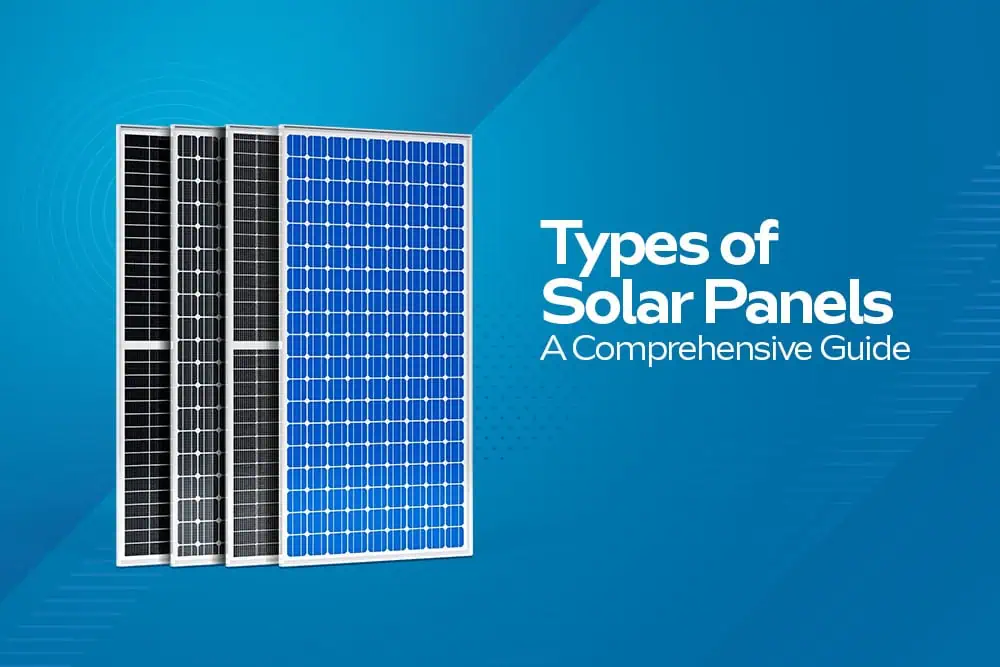
Solar panels convert sunlight into electricity through the photovoltaic effect. They consist of solar cells made from silicon, boron, and phosphorus. When sunlight hits these cells, it knocks electrons loose, creating a flow of electricity. This process defines solar panels as photovoltaic (PV) panels.
Types of Solar Panels
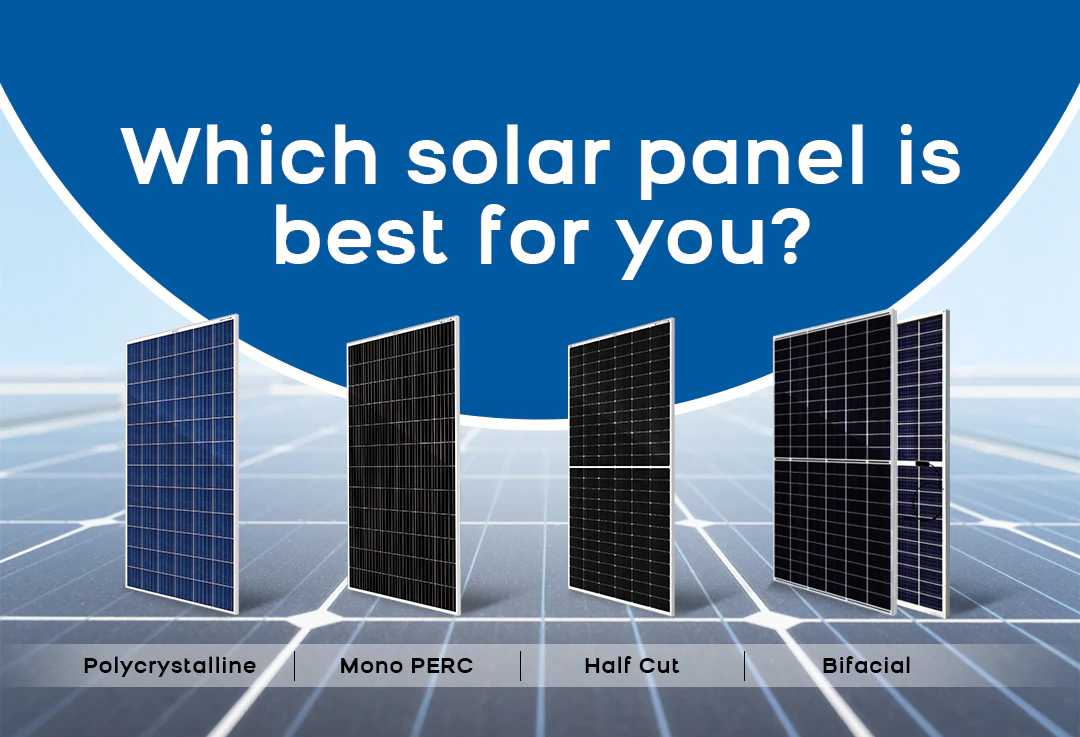
There are several types of solar panels available today, each with its strengths and weaknesses. The main categories include:
- Monocrystalline Solar Panels
- Polycrystalline Solar Panels
- PERC (Passivated Emitter and Rear Cell) Panels
- Thin-Film Solar Panels
1. Monocrystalline Solar Panels
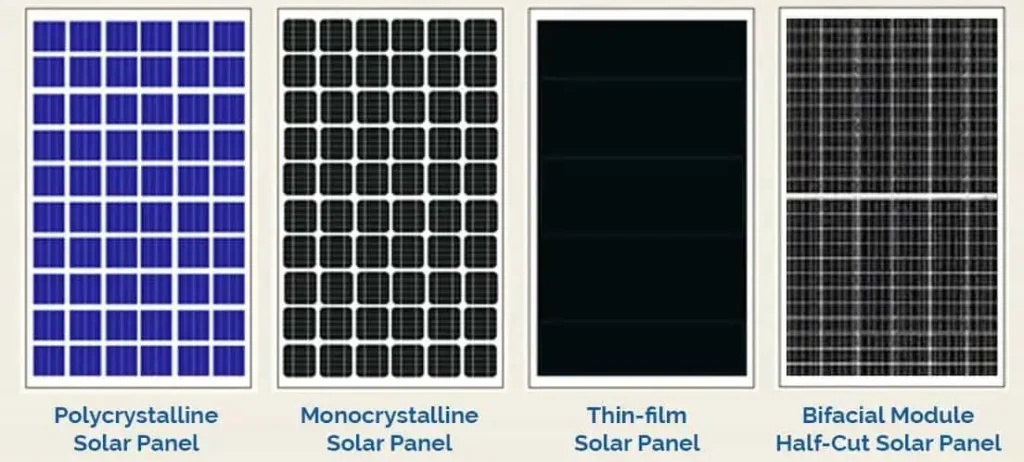
Monocrystalline panels are made from single, pure silicon crystals, giving them their characteristic dark color and rounded edges. They are known for their high efficiency (over 20%) and space efficiency, making them ideal for limited spaces. However, they are also the most expensive option due to the energy-intensive manufacturing process.
Advantages:
- High efficiency
- Long lifespan
- Space-efficient
Disadvantages:
- Higher initial cost
- Some older models may suffer from light-induced degradation.
2. Polycrystalline Solar Panels
Polycrystalline panels are made from multiple silicon crystals melted together. They are typically blue with a speckled appearance and are less expensive than monocrystalline panels, making them a popular choice for budget-conscious consumers. However, they have lower efficiency (15-17%) and space efficiency.
Advantages:
- Lower cost
- Less silicon waste during production
Disadvantages:
- Lower efficiency
- Shorter lifespan compared to monocrystalline panels
3. PERC Panels
PERC panels enhance the traditional monocrystalline design by adding a passivation layer on the rear surface. This layer increases efficiency by reflecting unabsorbed sunlight back into the cell and reducing electron recombination. PERC panels can achieve higher efficiency than standard monocrystalline panels.
Advantages:
- Higher efficiency (up to 5% more than traditional monocrystalline)
- Smaller physical footprint for the same power output
Disadvantages:
- Slightly more expensive than traditional monocrystalline options
4. Thin-Film Solar Panels
Thin-film panels are made by depositing photovoltaic materials onto a substrate, resulting in lightweight and flexible panels. They can come in various sizes and are easier to install, but they generally have lower efficiency (6-15%) than crystalline options.
Advantages:
- Lower cost
- Flexible installation options
Disadvantages:
- Lower efficiency
- Shorter lifespan
Variations of Thin-Film Panels
Thin-film technology includes several materials:
- Cadmium Telluride (CdTe): Cost-effective but toxic in nature.
- Amorphous Silicon (A-Si): Low efficiency but very low production costs.
- Copper Indium Gallium Selenide (CIGS): Offers higher efficiency than other thin-film types.
Efficiency Comparison Among Panel Types
| Panel Type | Efficiency Rate |
|---|---|
| Monocrystalline | 20% and up |
| PERC | Up to 25% |
| Polycrystalline | 15-17% |
| CIGS | 13-15% |
| CdTe | 9-11% |
| A-Si | 6-8% |
Power Capacity of Solar Panels
Monocrystalline panels typically offer the highest power capacity, with outputs up to 300W per panel. Polycrystalline panels can generate between 240W and 300W. Thin-film panels vary widely in capacity based on their size.
Cost Analysis of Solar Panels
Here’s a breakdown of the average cost per watt for different types of solar panels:
| Panel Type | Average Cost per Watt |
|---|---|
| PERC | $0.32 – $0.65 |
| Monocrystalline | $1.00 – $1.50 |
| Polycrystalline | $0.70 – $1.00 |
| CIGS | $0.60 – $0.70 |
| CdTe | $0.50 – $0.60 |
| A-Si | $0.43 – $0.50 |
Generations of Solar Panels
Overview of Solar Panel Generations
Solar panels can also be categorized by their generation, which refers to the technology used in their production and their efficiency levels. Here’s a look at the three main generations:
Table: Generations of Solar Panels
| Generation | Type | Efficiency Rate | Advantages | Disadvantages |
|---|---|---|---|---|
| 1st Generation | Monocrystalline & Polycrystalline | ~15% – 20% | Proven technology; high efficiency | Higher costs; limited innovation |
| 2nd Generation | Thin-Film Solar Cells | ~7% – 15% | Flexible; lower cost; lighter weight | Lower efficiency; shorter lifespan |
| 3rd Generation | Advanced technologies (e.g., organic PV) | Up to 41% | High potential efficiency; innovative materials | Mostly in research phase; commercialization challenges |
1st Generation Solar Panels
These panels consist mainly of monocrystalline and polycrystalline technologies that are widely used and trusted in various applications.
2nd Generation Solar Panels
This generation includes thin-film technologies that allow for flexibility and lower production costs but typically at the expense of efficiency.
3rd Generation Solar Panels
These are experimental technologies that promise high efficiency and sustainability but are still largely under research or development phases.
Other Considerations When Choosing Solar Panels
Temperature Coefficient
Higher temperatures can impact solar panel performance. Monocrystalline and polycrystalline panels have a temperature coefficient between -0.3% to -0.5% per °C, while thin-film panels can be around -0.2% per °C, making them suitable for hotter climates.
Fire Rating
Solar panels must meet fire safety standards that align with the fire rating of the roofs they are installed on.
Hail and Hurricane Ratings
Solar panels undergo rigorous testing for hail impact resistance. Crystalline panels tend to withstand impacts better than thin-film types.
Light-Induced Degradation (LID)
LID can cause a decrease in power output during the first few hours of sunlight exposure, particularly in crystalline panels due to manufacturing residues.
Summary: Comparing Solar Panel Types
| Feature | Monocrystalline | Polycrystalline | PERC | Thin-Film |
|---|---|---|---|---|
| Initial Cost | Highest | Lower | Middle | Variable |
| Efficiency | 20% and up | 15-17% | Highest | Lowest |
| Appearance | Black | Blue | Black | Variable |
| Advantages | High efficiency | Cost-effective | Space-efficient | Flexible |
| Disadvantages | Expensive | Lower efficiency | Higher initial cost | Short lifespan |
Which Solar Panels are the Best? Find Out Here
Each and every type of solar panel consists of different capabilities. However, there are some points of difference in each of them. They may differ in their efficiency, cost, and capacity. Let’s quickly understand their difference:
| Solar Panel Types | Efficiency | Cost(Approx. Avg Cost per Watt) (in dollars) | Capacity(Watt per Panel) |
| Monocrystalline solar panels | 20% or more | 1 – 1.50 | up to 300w |
| Polycrystalline solar panels | 15 – 17% | 0.70 – 1 | around 240 – 300w |
| PERC | 25% or more | 0.32 – 0.65 | Greater than or equal to 300w |
| Thin-film solar panels | Less than or equal to 15% | 0.44 – 0.70 | It is variable however, it contains capacity less than others |

Conclusion: Choosing the Right Solar Panel Type
Selecting the appropriate solar panel depends on your specific needs and environmental conditions. For limited spaces, monocrystalline or PERC panels are ideal due to their efficiency. For larger properties where cost is a concern, polycrystalline may be suitable. Thin-film panels work best in situations where flexibility is required or where installation is challenging.
By understanding the different types of solar panels and their characteristics, you can make an informed decision that aligns with your energy needs and budget, paving the way for a sustainable future.